


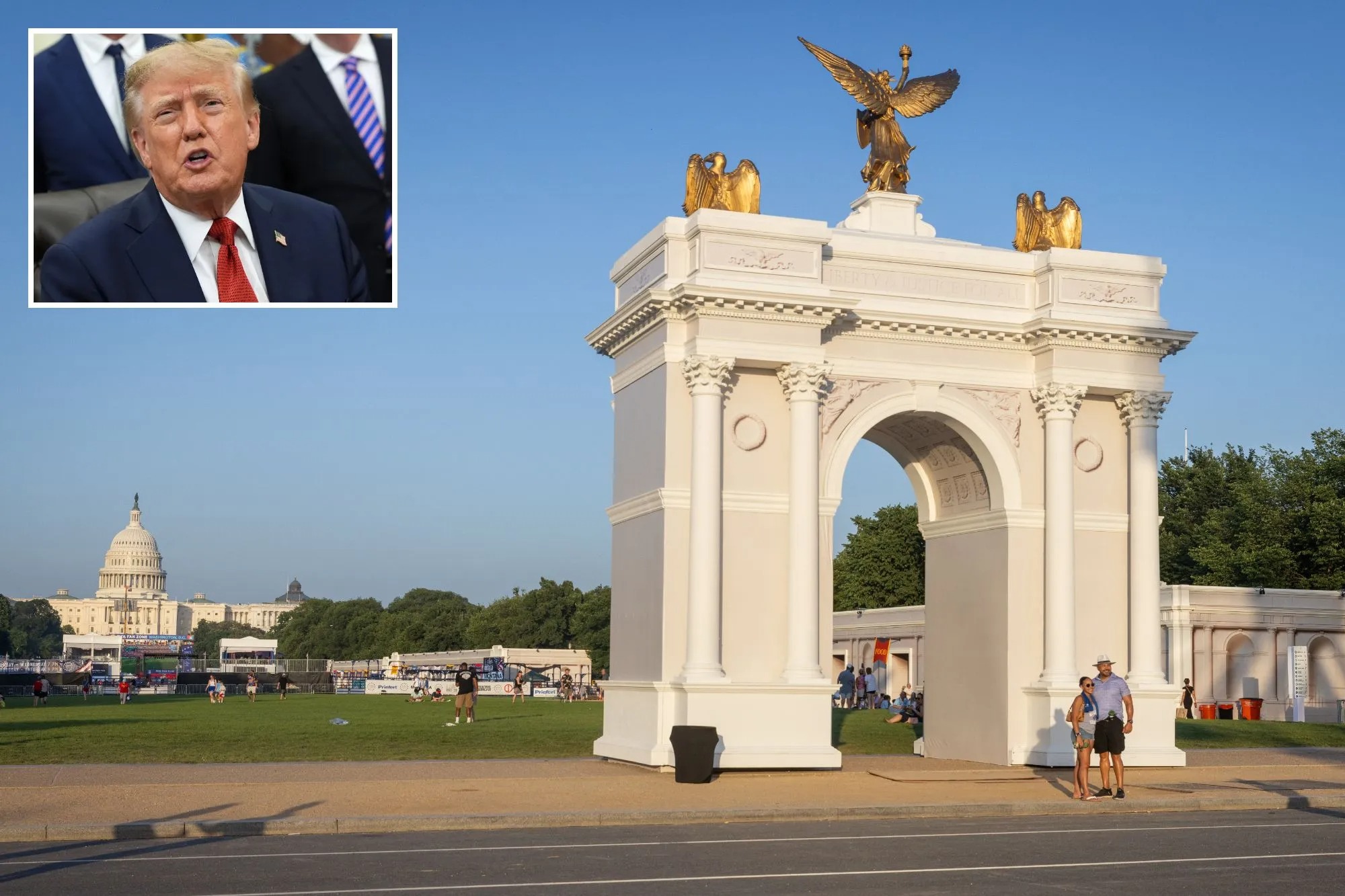
President Donald Trump’s proposal for a large arch near Arlington National Cemetery has sparked fresh debate after he suggested the structure could serve a security purpose in addition to being a national monument.
Trump said on Sunday that the planned arch at the Receptive Circle near Arlington National Cemetery could be used to store drones, snipers and ammunition. The comments added a new dimension to an already controversial project that has faced criticism from lawmakers, planners and members of the public.
The proposed structure would stand about 250 feet tall and would be located near one of the most visible areas connecting Arlington National Cemetery with Washington’s monument corridor. Critics have argued that the project could affect historic views between key landmarks in the nation’s capital.
Trump shared the latest details about the project on his Truth Social platform. He suggested that the arch could play a role in national defense and security while also serving as a major architectural landmark.
The announcement quickly drew reactions from visitors and residents who questioned whether a historic monument should be used for military or security purposes.
Kareem Baber of New York City said he did not believe such functions belonged inside a monument. He argued that security equipment could be placed elsewhere without changing the purpose of a historic structure.
Others voiced similar concerns. Kimagesha Patrick, also visiting from New York City, said she did not see a need for additional defensive features at the location. She expressed concern that such measures could create unnecessary anxiety and change the atmosphere around national landmarks.
The project has already generated significant public discussion because of its size and location. Opponents have argued that the structure could alter the visual character of the area and interfere with important sightlines between monuments and memorials.
The latest proposal prompted criticism from elected officials as well.
Virginia Representative Don Beyer strongly opposed the idea of using the arch as a drone facility. In a statement posted on social media, Beyer argued that placing drone operations near Ronald Reagan Washington National Airport would raise safety concerns because of the area’s busy air traffic.
Lawmakers and critics have also pointed to broader questions about the purpose of major national monuments. Some have argued that historic landmarks should remain focused on remembrance, public service and national heritage rather than military functions.
The debate surrounding the arch follows earlier controversy involving another Trump-backed construction project. The president has previously promoted plans for a new White House ballroom, a proposal that has also faced legal challenges and public scrutiny.
Trump has suggested that some government construction projects could provide practical benefits beyond their ceremonial roles. Supporters argue that combining public infrastructure with security features could improve efficiency and preparedness.
Opponents, however, say national landmarks should not be redesigned around military uses. They believe such changes could alter the historical meaning and public perception of important sites.
The proposed arch remains under review and has not yet received final approval. Planning officials are expected to continue evaluating the project in the coming months.
The National Capital Planning Commission is scheduled to make a final decision on the proposal later this fall. The commission will review design details, public feedback and potential impacts on the surrounding area before casting its vote.
Until then, debate over the project is likely to continue. Supporters view the arch as a bold national symbol that could serve multiple purposes. Critics argue that the location and proposed security role raise important questions about safety, preservation and the future appearance of the nation’s capital.
As officials prepare for the final review process, the Trump arch security plan remains one of the most closely watched development proposals in Washington, drawing attention from lawmakers, planners and members of the public across the country.
