


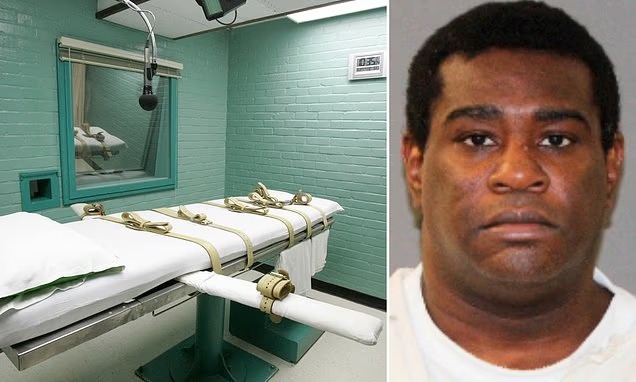
Texas executed death row inmate Jamaal Howard on Wednesday evening after courts rejected several last-minute appeals challenging both his conviction and the state’s lethal injection process.
Howard, 46, was pronounced dead at 8:03 p.m. local time at the state prison in Huntsville after receiving a lethal dose of pentobarbital. His execution was the sixth carried out in Texas this year and the 30th execution in the United States in 2026.
Before the execution began, Howard addressed members of the victim’s family who were present to witness the procedure. According to prison officials, he offered repeated apologies for his actions.
Howard was sentenced to death for the 2000 killing of convenience store clerk Vickie Swartout during a robbery in the small town of Silsbee, northeast of Houston.
Prosecutors said Howard, who was 20 years old at the time, entered the store, shot the 42-year-old clerk in the chest and stole $114 along with a carton of cigarettes. Surveillance footage from the store was later presented as key evidence during his trial and showed the fatal shooting.
In the hours leading up to the execution, Howard’s legal team made several efforts to stop the procedure.
His attorneys argued that he was intellectually disabled and therefore should not be eligible for execution. The United States Supreme Court ruled in 2002 that people with intellectual disabilities cannot be executed. However, states retain authority to determine how such claims are evaluated.
Texas officials argued that Howard failed to provide evidence sufficient to meet the legal standard required for an intellectual disability claim.
State courts rejected the request for a stay of execution. A second appeal challenging the use of pentobarbital was also denied. Later in the evening, the U.S. Supreme Court declined to intervene.
Howard’s lawyers also pointed to concerns raised by the recent failed execution attempt of Tennessee death row inmate Christa Pike.
Pike survived an execution procedure on September 30 after receiving two doses of pentobarbital. The incident has drawn national attention and triggered ongoing legal battles over what caused the execution to fail.
Her attorneys have said Pike suffered severe medical complications and remains under medical care while recovering. They are seeking access to evidence and records related to the procedure as investigations continue.
Howard’s legal team argued that Texas should not move forward with another pentobarbital execution until more information becomes available about the Tennessee case.
The attorneys claimed there was a possibility that execution drugs could degrade over time and questioned whether the pentobarbital planned for use in Texas met appropriate standards.
According to court filings, the lawyers requested information about the drug that Texas intended to use. They argued that the state had not yet provided certain details they sought regarding the lethal injection process.
The appeals court rejected those arguments and allowed the execution to proceed.
Prison officials reported that Howard remained calm throughout the day.
During the approximately 45-mile trip from the state’s death row facility to the Huntsville execution unit, officials said he was talkative and engaged in conversation with correctional officers.
After arriving at the prison, he was placed in a holding area near the execution chamber. Officials said he continued asking questions and remained involved in discussions about the process.
The execution marked another milestone in a year that has seen a significant number of death penalty cases carried out across the country.
Florida has led the nation in executions during 2026, accounting for more than half of the executions completed so far this year. Texas remains one of the most active death penalty states and has scheduled additional executions before the end of the year.
Most states that permit capital punishment continue to use lethal injection as their primary execution method.
At the same time, ongoing legal challenges and concerns about execution procedures have increased scrutiny of how states administer the death penalty.
The failed execution attempt in Tennessee has added new attention to those concerns, particularly regarding the use of pentobarbital and the transparency of execution protocols.
Despite those questions, courts allowed Texas officials to proceed with Howard’s execution. With his death, the national execution count for 2026 reached 30, continuing a year marked by intense legal and public debate over capital punishment in the United States.
