


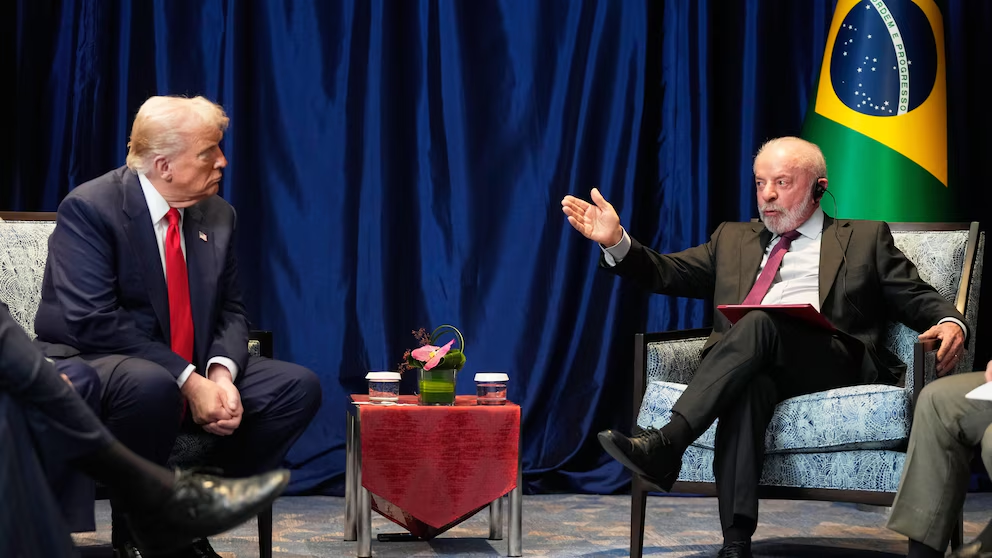
Brazilian President Luiz Inácio Lula da Silva is set to meet with US President Donald Trump in Washington, where the two leaders will discuss tariffs, organized crime, and trade cooperation.
The meeting comes after months of strained relations between the two countries, followed by gradual diplomatic engagement.
Brazil’s finance minister, Dario Durigan, said the goal of the talks is to strengthen cooperation while protecting Brazil’s national interests.
He said both sides aim to maintain open and constructive dialogue during the White House meeting.
Durigan added that expectations for the meeting are positive despite recent tensions between the two governments.
Relations worsened last year after the US imposed a 50 percent tariff on Brazilian goods.
The tariff was linked to political disputes involving former Brazilian President Jair Bolsonaro and his legal troubles over an alleged coup plot.
Brazil strongly defended its sovereignty at the time, while the US later eased some tariffs as part of broader efforts to manage inflation and consumer costs.
Since then, both governments have taken steps to rebuild communication.
Diplomatic contact resumed during the United Nations General Assembly, followed by a private meeting between the leaders in Malaysia and several phone conversations.
Analysts say Brazil has strengthened its negotiating position following its response to the earlier tariff dispute.
Experts believe the US now views Brazil as an important strategic partner but still applies pressure on key trade issues.
One of the main topics expected in the meeting is cooperation in the fight against organized crime.
The US has reportedly considered classifying Brazil’s major criminal groups, including Red Command and the First Capital Command, as foreign terrorist organizations.
Security experts say such a move could increase US influence in regional law enforcement matters.
However, Brazilian officials argue that the issue should be handled through joint cooperation rather than unilateral action.
A Brazilian government source said both countries appear committed to expanding coordination against criminal networks instead of taking separate measures.
Trade and natural resources are also expected to play a major role in the discussions.
Brazil holds some of the world’s largest reserves of rare earth minerals, which are essential for modern technologies such as smartphones, electric vehicles, and renewable energy systems.
US interest in these resources has grown as global competition for critical minerals increases.
Durigan said Brazil does not want to remain only a supplier of raw materials.
He emphasized that the country aims to attract investment that supports local industrial development and job creation.
He added that Brazil wants partnerships with universities and industries to build long-term value inside the country.
The meeting also takes place during a politically challenging period for Lula at home.
Brazil’s Congress recently overturned a presidential veto on prison-related legislation connected to Bolsonaro’s case.
In another setback, the Senate rejected Lula’s nominee for the Supreme Court, marking the first such rejection in over a century.
Despite domestic political pressure, Lula continues to prepare for a potential fourth, non-consecutive presidential term in the upcoming elections.
Polls currently show a close race between Lula and opponents linked to Bolsonaro’s political movement.
Political observers say the Washington meeting could influence both foreign policy direction and Brazil’s economic strategy moving forward.
The outcome of the talks is expected to shape future trade relations, security cooperation, and investment flows between Brazil and the United States.
