


Baylor campus faith politics divide became clear this week as two very different events took place just steps apart on the Waco campus in Texas. One event featured a conservative political tour stop, while another focused on inclusion and progressive Christian voices. The result was a sharp contrast in messages, turnout, and campus reaction.
The conservative event was part of the national Turning Point USA tour. It took place at Waco Hall and featured several high-profile speakers, including “border czar” Tom Homan, Texas Attorney General Ken Paxton, and commentator Benny Johnson. The event was the only planned stop in Texas for the tour.
At the same time, a coalition of progressive student groups held a separate event nearby called “All Are Neighbors.” That gathering included Christian leaders who identify as LGBTQ+, marking a first for the university in terms of speaker approval.
The Baylor campus faith politics divide was visible not only in ideas but also in participation. The Turning Point USA event faced confusion from the start. It was first promoted as open to the public with free ticket access. However, just one hour before it began, organizers said only Baylor students could attend.
Baylor officials later said 438 students attended the event in a venue that holds about 2,200 people. Some attendees traveled long distances after planning to join the public event.
One visitor, Mitchell, said he came with church members from Longview, Texas. They brought a large cross and spent time praying on campus. He said they only learned about the restriction after arriving.
Inside the venue, frustration also grew over communication changes. Organizers initially promoted one speaker lineup, then shifted to Ken Paxton after earlier announcements. At one point, Donald Trump Jr. was expected to appear but was later removed from promotion.
The confusion also affected media access. Several news outlets, including local and campus publications, were told they would not receive press credentials. Some student reporters later attended as regular students instead.
A Baylor student journalist explained that coverage was split between both campus events to provide balance. Reporters attended both the Turning Point event and the alternative gathering to capture different viewpoints.
Inside Waco Hall, sections of the venue were reportedly blocked off with curtains. Some attendees said this limited visibility of the full audience.
One student, Kyle Perry, who studies at Truett Seminary, said he attended to understand how faith and politics were being connected in the event. He said some comments made during the program felt inappropriate for a Christian university setting.
He pointed to remarks made by commentator Benny Johnson, which he believed were offensive. Perry said he later questioned how such messaging aligned with Christian teachings about respectful speech.
During a Q&A session, Perry asked a question about accountability for public statements. He did not receive a direct answer.
The Baylor campus faith politics divide was also reflected just a short walk away at the “All Are Neighbors” event. Held in Cashion Academic Center, the gathering focused on inclusion, faith, and support for marginalized students.
Organizers said the goal was not to oppose the Turning Point event, but to offer a different space for discussion. Attendance was estimated between 270 and 400 people.
Speakers included Human Rights Campaign president Kelley Robinson and Rev. Paul Brandeis Raushenbush, president of the Interfaith Alliance. Both speakers are openly gay and Christian, marking a significant moment for campus discussions on identity and faith.
Student organizer Hanna Al-Hayek said the event aimed to highlight that all students belong at Baylor. She said students should feel supported and heard on campus.
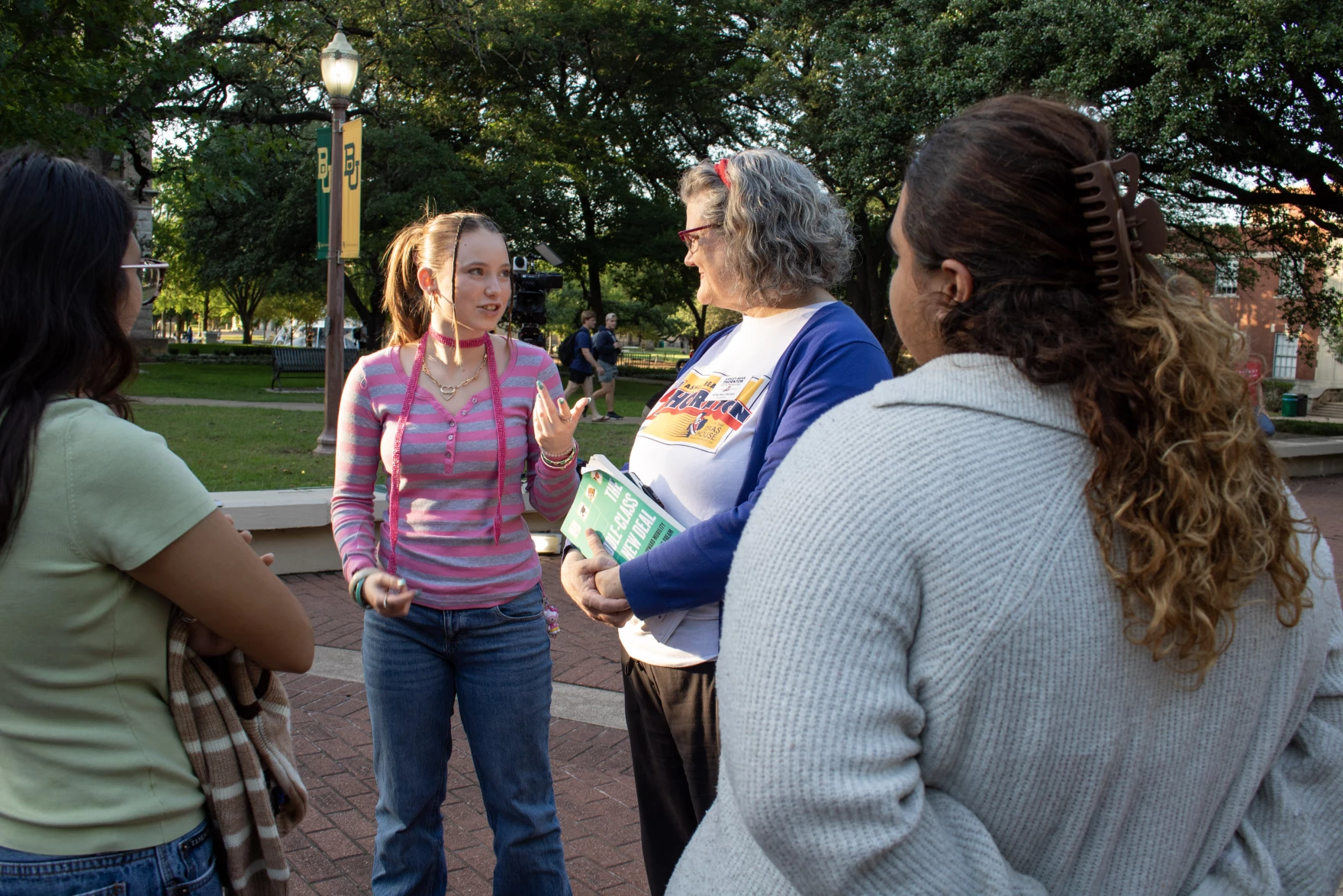
Some students later gathered to continue discussions in outdoor campus areas. They spoke about dialogue, respect, and shared values despite differences in opinion.
However, the event also triggered wider institutional tension. The Baptist General Convention of Texas expressed concern over Baylor’s approval of speakers who support LGBTQ+ advocacy. In a letter, the group suggested reviewing its relationship with the university.
Baylor responded by stating it does not endorse individual speakers’ views. The university emphasized its commitment to open discussion and academic freedom.
The Baylor campus faith politics divide highlights a growing national trend on college campuses, where faith, politics, and identity issues increasingly intersect in public debate.
