


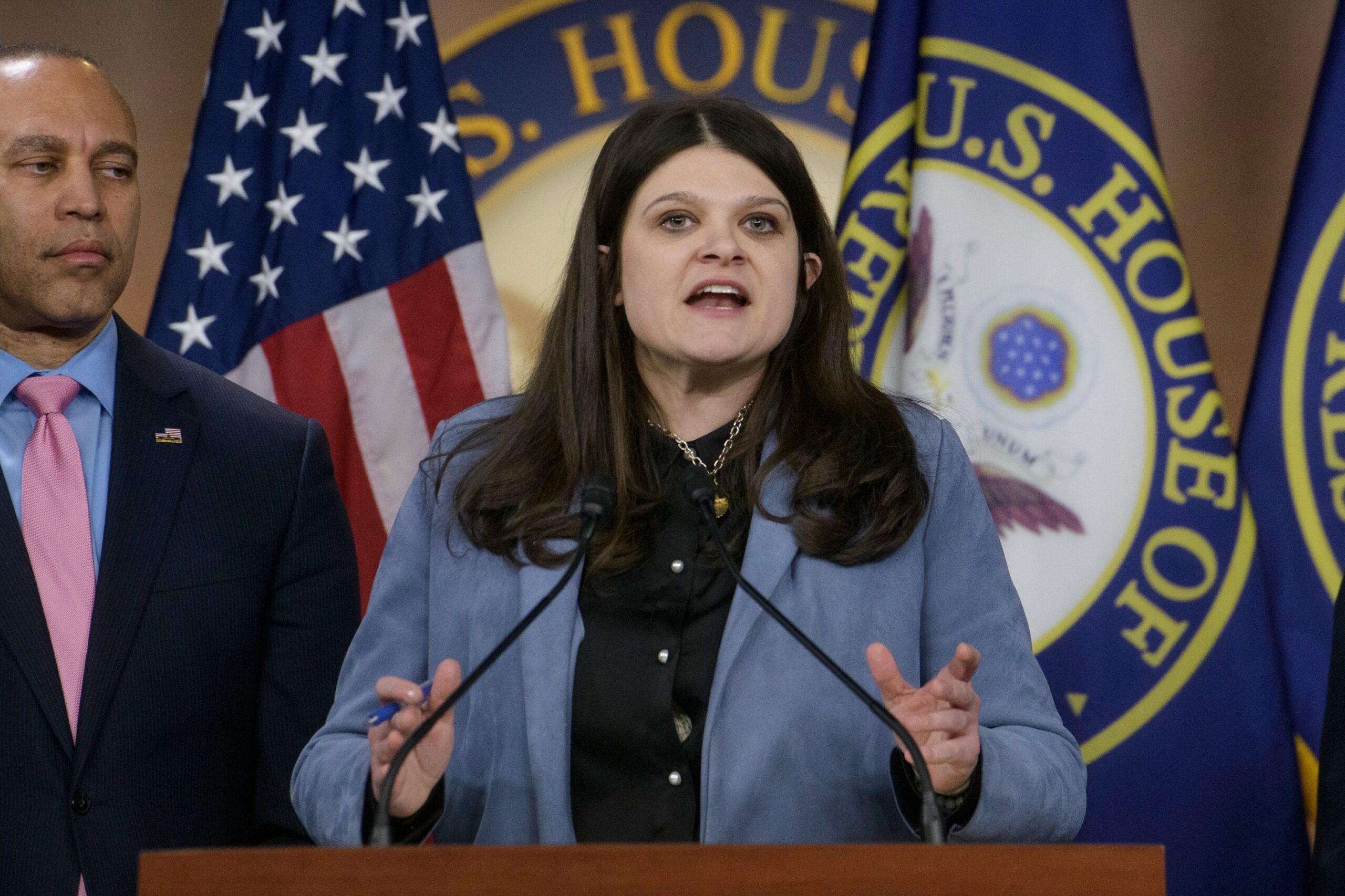
Democratic Congresswoman Haley Stevens has endorsed Republican Mike Rogers in Michigan’s Senate race, breaking with her party’s nominee just days before the US midterm elections. Her decision has sparked strong criticism from Democratic leaders and raised fresh concerns about party unity.
Stevens announced her endorsement on Sunday, choosing Rogers over Abdul El-Sayed, who defeated her in the Democratic Senate primary in August. The contest is one of the key races that could help decide control of the US Senate.
The endorsement came after weeks of public tension between Stevens and El-Sayed over Israel and the war in Gaza. The dispute has become a major issue in the final days of the campaign, as Democrats seek to win control of Congress and challenge President Donald Trump’s agenda.
Stevens had previously promised to support El-Sayed after losing the primary. As recently as Wednesday, she said she still wanted him to win. Her sudden decision to back Rogers has therefore drawn strong reactions from party members and political allies.
The disagreement grew after an independent political group supporting El-Sayed released an advertisement about US military aid to Israel. The group, Rebellion PAC, linked that spending to the rising cost of living in the United States.
The advertisement showed a couple shopping for groceries who decided to put back a carton of eggs. The scene suggested they needed to save money for what the ad described as “killing Palestinians.”
Stevens called the advertisement anti-Semitic and demanded that El-Sayed condemn it. She also criticised his arguments that money spent on aid to Israel could instead support schools, health care and child care.
El-Sayed said his campaign did not produce the advertisement and that he disagreed with its message. He accused Stevens of trying to reopen their primary battle rather than focus on defeating Rogers.
The dispute reflects their different views on Israel. Stevens is a strong supporter of Israel, while El-Sayed has sharply criticised Israel’s war in Gaza and US military aid to the country.
These differences were also central to the Democratic primary. A political group linked to the American Israel Public Affairs Committee spent tens of millions of dollars to support Stevens during the contest. El-Sayed nevertheless won the nomination.
The tension reached a new level on Sunday, when Stevens and El-Sayed were expected to attend a church service in Detroit. The event was intended to show unity among Democrats ahead of the election.
However, Stevens did not attend. In a video posted on social media, she said El-Sayed’s campaign had told her she was no longer welcome. She then announced that she would support Rogers for the Senate.
Democratic Congresswoman Debbie Dingell gave a different account of the decision. Dingell, who helped organise the church event, said she had asked Stevens not to attend because the dispute had become too distracting.
During a television interview on Sunday, Stevens said El-Sayed had become increasingly angry during the campaign. She also accused him of actions she viewed as anti-Semitic. El-Sayed has disputed the effort to link him directly to the independent group’s advertisement.
Stevens also criticised El-Sayed’s association with political streamer Hasan Piker. She said she could not support what she viewed as hate and insisted that her endorsement was an effort to help the Democratic Party.
Despite backing Rogers, Stevens said she remained a Democrat. She said she planned to vote for Democratic candidates in about 90 percent of the other races on her ballot but would support Rogers in the Senate contest.
Her announcement prompted an angry response from Senate Democratic Leader Chuck Schumer. He called the endorsement a “despicable betrayal” and said Senate Democrats remained united behind El-Sayed.
Schumer urged voters to focus on issues such as health care, civil rights and the policies affecting working families. He also highlighted Rogers’ support from Trump as a reason for Democrats to oppose the Republican candidate.
Democratic National Committee Chair Ken Martin also criticised Stevens. He described her decision as a betrayal of party values and said the move risked dividing Democrats at a crucial point in the election.
The Michigan Democratic Party issued a similar response. Its chair, Curtis Hertel, said Stevens had abandoned the values she claimed to support by campaigning with Rogers.
The backlash has also affected Stevens’ congressional office. Justin German, her chief of staff for eight years, announced that he and several other staff members had resigned over her endorsement.
Stevens did not directly confirm the reported resignations during her television interview. She said her office was going through a transition as she prepares to leave Congress in January.
The dispute has added further pressure to Michigan’s closely watched Senate race. With voters preparing to cast their ballots, Stevens’ endorsement could test Democratic unity and influence the final days of the campaign. The result will also matter in the wider fight for control of the Senate.
