


The Federal Reserve kept interest rates unchanged on Wednesday as inflation remained above its target. Officials decided to wait for more economic data before taking further action. The decision followed a rate increase in September, showing that the central bank remains cautious about the economic outlook.
The Federal Open Market Committee voted 10-2 to keep the federal funds rate between 3.75% and 4%. In September, the Fed raised rates by 0.25 percentage points. That move was its first increase since July 2023.
The latest decision reflects a difficult balance for policymakers. Economic activity remains strong, but inflation continues to cause concern. Officials must decide whether higher rates are needed to control prices or whether they should wait to see how earlier decisions affect the economy.
In its policy statement, the committee said economic activity had continued to grow at a strong pace. It also highlighted gains in productivity and business investment. Job growth had kept pace with the workforce, while the unemployment rate had changed little.
These signs suggest that the economy remains firm despite earlier changes in borrowing costs. However, strong demand can also make it harder to bring inflation down. The Fed must watch both trends as it considers its next steps.
Inflation remains a central concern for the central bank. The Fed aims to keep annual inflation at 2%, a goal it has struggled to reach in recent years. Officials said they need more information to judge how the economy is developing and what action may be needed.
The committee also repeated its commitment to price stability. Its future decisions will depend on incoming data, the economic outlook and the balance of risks. This means the current pause does not guarantee that rates will remain unchanged at the next meeting.
Two policymakers disagreed with Wednesday’s decision. Cleveland Fed President Beth Hammack and Fed Governor Lisa Cook both supported raising rates by another 0.25 percentage points.
Their votes highlight continuing concern within the Fed about persistent inflation. They appear to favor further action to slow demand and reduce pressure on prices. The majority, however, chose to wait for a clearer picture of economic conditions.
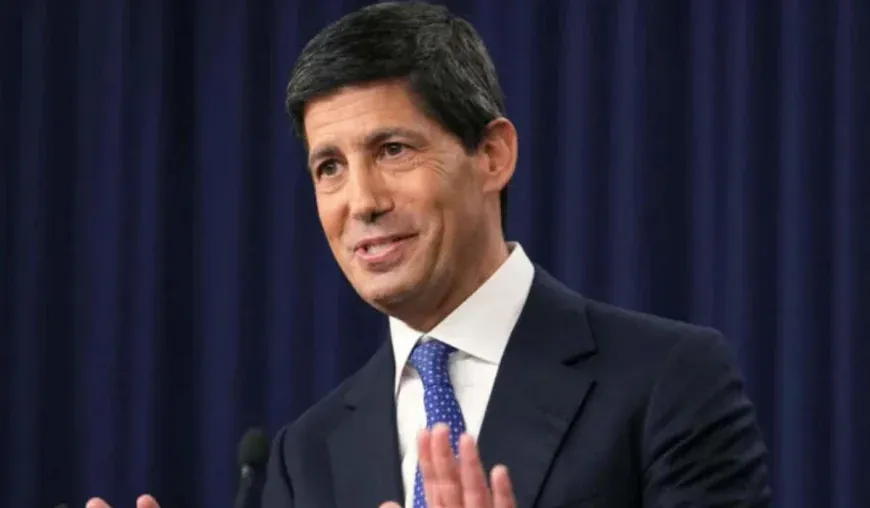
Federal Reserve Chair Kevin Warsh said policymakers review the available evidence at every meeting. He described this process as “interrogating reality,” meaning that officials must test their expectations against the latest economic figures.
Warsh said the task had become more complex because business investment remained strong, the labor market was steady and inflation continued to exceed the Fed’s goal. These factors can send different signals about whether interest rates should rise, fall or remain unchanged.
The Fed has two main economic goals. It seeks to support maximum employment while maintaining stable prices. Warsh said the labor market was in a positive position because job growth had remained steady and unemployment had changed little.
Yet many Americans continue to face higher living costs. Warsh said inflation had remained above the central bank’s target for close to six years. He stressed that reducing price growth remains the Fed’s responsibility.
High inflation makes everyday goods and services more expensive. It can place pressure on household budgets and make it harder for businesses to plan. Companies may also face greater uncertainty when deciding whether to expand, hire workers or invest in new projects.
Interest rates are one of the Fed’s main tools for controlling inflation. When borrowing costs rise, mortgages, car loans and business loans can become more expensive. This can reduce spending and demand, helping to ease price pressures over time.
However, higher rates can also slow investment and economic growth. Policymakers must therefore consider the risk of keeping borrowing costs too high for too long.
Warsh said the effects of September’s rate increase were beginning to appear in financial markets. Credit and financial conditions had tightened for some households and businesses, as officials had expected. Investors and lenders were also showing greater care when deciding where to place their money.
Even so, Warsh said he was not ready to describe overall financial conditions as tight. He noted that recent changes could help support a longer period of stable growth and lower inflation.
Global uncertainty also remains part of the economic picture. Geopolitical events can affect energy prices, trade, supply chains and investor confidence. These changes can influence both inflation and economic activity in the United States.
The Fed’s next decision will depend on how prices, employment and growth develop. Some officials may push for another increase if inflation stays high, while others may prefer to wait. Future rate cuts could also become an option if economic conditions change.
For now, the central bank has chosen to pause and review the evidence. Its main challenge is to bring inflation closer to 2% without causing a sharp slowdown in employment or economic growth. The coming data will help determine whether holding rates steady remains the right approach.
