


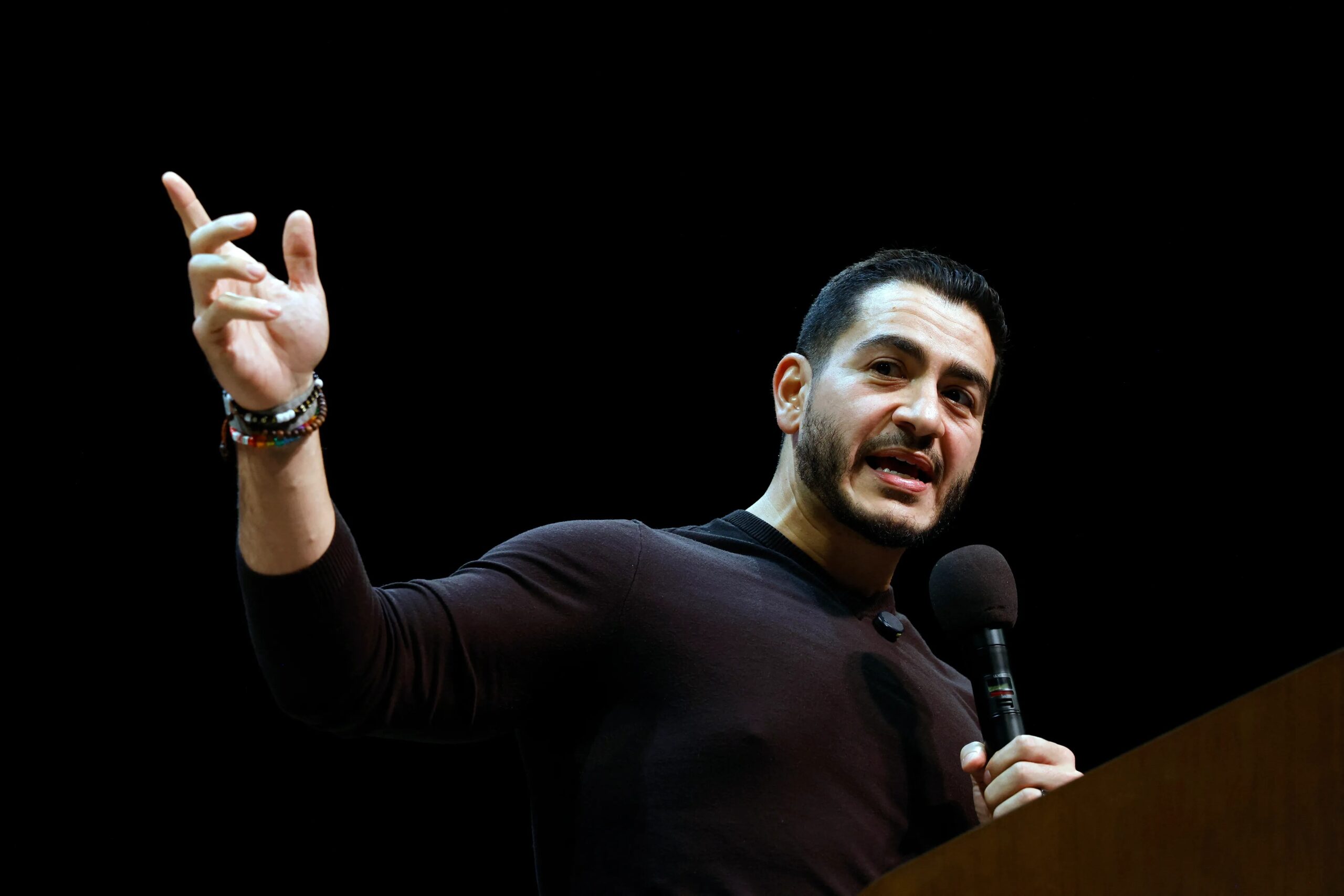
US President Donald Trump has sparked a political backlash after using the September 11 attacks to target Abdul El-Sayed, a Democratic candidate in Michigan’s closely watched Senate race.
At a rally in Michigan on Sunday, Trump called El-Sayed “a jihadist” and warned that his election could put the country at risk. He also suggested the candidate would need to pass through a metal detector before being allowed to enter the Senate.
The comments drew criticism from people who described them as Islamophobic. El-Sayed, who was born in the United States to Egyptian parents, said Trump was using his name and faith to distract voters from issues affecting their daily lives.
The dispute has added to the tension in a race that could help decide which party controls the US Senate after the November 3 midterm elections.
El-Sayed answered Trump’s remarks at a rally of his own. He challenged the president’s decision to refer to him by his middle name, Mohamed.
“I’ll be Senator Mohamed to you, bro,” El-Sayed said.
He also argued that voters were more concerned about the cost of food, fuel and health care than attacks on his identity.
“They think that by pointing at my name and my faith, that somehow you’re going to ignore the fact that you can’t afford your gas or your groceries, can’t see a doctor,” he said.
Trump links the campaign to 9/11
Trump brought up the September 11, 2001, attacks as he attacked El-Sayed and the Democratic Party. He introduced the father of Todd Beamer, a passenger on United Airlines Flight 93, as a guest speaker at the rally.
Beamer was among the passengers who fought back against the hijackers. The plane crashed in a field in Pennsylvania before reaching its intended target.
Trump used the appearance to warn that a victory for El-Sayed and Democrats would lead to greater security risks.
“If Abdul and the Democrats win, they will open the floodgates and invite hordes of jihadis to our shores, creating a nightmare of violence and terror until you cannot even have a Christmas,” Trump said.
He also made claims about El-Sayed and his family, including alleging that the candidate was a member of the Muslim Brotherhood. The material provided does not include evidence to support that accusation.
El-Sayed has denied any connection to extremist groups. His supporters say Trump’s remarks rely on stereotypes about Muslims rather than evidence about the candidate’s views or record.
The comments have renewed debate about the role of religion and national security in American election campaigns. Critics argue that invoking the September 11 attacks to target a Muslim candidate risks encouraging prejudice and casting suspicion on a wider community.
Sanders accuses Trump of using fear
Senator Bernie Sanders appeared alongside El-Sayed and criticized the attacks on the Democratic candidate.
“The reason they are using Islamophobia against Abdul is because they have nothing to say about the real issues,” Sanders said.
Sanders argued that the campaign should focus on economic pressure and public services rather than a candidate’s faith. El-Sayed has made the cost of living and access to health care central parts of his campaign.
The former public health official has faced criticism from Trump and Republican candidate Mike Rogers. He has rejected accusations linking him to extremist groups and has sought to keep attention on his policy plans.
The latest exchange has made the contest more bitter as both parties work to attract voters in a state that could play a major role in the midterm elections.
A key contest for the Senate
El-Sayed is challenging Rogers for a seat currently held by the Democrats. The race is among a small group of contests that could determine the balance of power in Congress.
If El-Sayed wins, he would become the first Muslim elected to the US Senate. His candidacy has drawn national attention as questions about identity, immigration and political division feature more prominently in the campaign.
The election is scheduled for November 3. Both parties see the race as important to their efforts to gain or keep control of the Senate.
For Democrats, Michigan offers a chance to defend a seat that could prove vital in a closely divided chamber. Republicans, meanwhile, are seeking to turn the contest into a broader argument about national security and the direction of the country.
The dispute over Trump’s remarks may further shape how voters view the candidates. Critics say the president’s comments cross a line by linking a Muslim candidate to terrorism without evidence. Others may see them as part of his wider political message on security and immigration.
El-Sayed is seeking to redirect the debate toward everyday concerns, including prices, health care and household costs. As election day approaches, the outcome may depend on whether voters focus more on those issues or on the increasingly sharp political attacks surrounding the race.
