


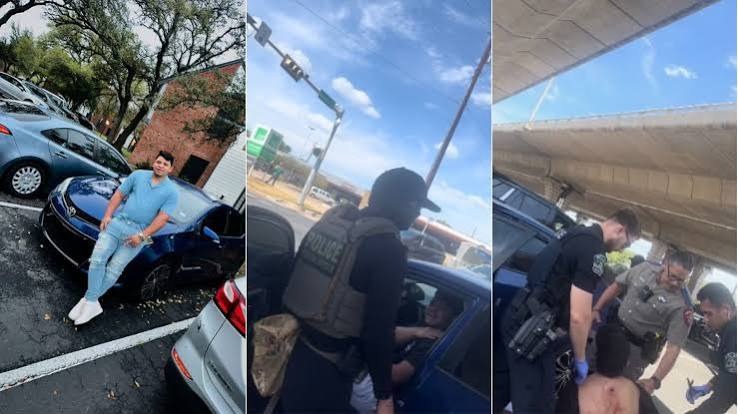
Fresh questions are emerging after reports claimed that a federal immigration agent involved in a shooting in North Austin was not wearing a body camera during the incident.
The shooting took place on Sunday and involved Wilber Rafael Garces Perez, a Venezuelan man who was injured during an encounter with immigration officers. Reports from several national outlets stated that the agent who fired the shot was not using an agency-issued body camera at the time.
The reports cited sources familiar with the case. Officials have not publicly explained why the camera was not being used.
The issue has drawn attention because federal officials recently announced a nationwide effort to expand the use of body cameras among immigration officers. The move followed several high-profile use-of-force incidents across the country and was presented as a step to improve accountability and transparency.
According to reports, another officer in the same vehicle was wearing a body camera. However, that footage did not record the actual moment when the shooting happened. As a result, important questions about the encounter remain unanswered.
The case has now moved into federal court.
U.S. District Judge Orlando Garcia issued an emergency order that temporarily prevents Garces Perez from being deported. The ruling ensures that he will remain in the United States while legal proceedings continue.
The judge also ordered that Garces Perez must attend the first hearing connected to the case. The hearing is set for Sept. 30.
The court action came as more details emerged about the injuries he suffered during the shooting.
Photographs released by the legal team representing Garces Perez show what appears to be the immediate aftermath of the incident. The images include a visible bullet wound in his upper back.
His lawyer, Kate Lincoln-Goldfinch, said she spoke with him by video on Tuesday after he was transferred from a hospital in San Antonio to a detention facility in South Texas.
According to the attorney, the gunshot caused a broken clavicle. She said he continues to deal with severe pain and swelling as he recovers.
Lincoln-Goldfinch said medical staff are providing Tylenol and ibuprofen to help manage his pain. She also stated that he is being housed in an isolated room that contains a flat bed that cannot be adjusted to meet medical needs.
Federal officials have defended their handling of the case.
In a statement released Tuesday, Department of Homeland Security Secretary Markwayne Mullin said Garces Perez does not have legal immigration status in the United States. He also said that Garces Perez did not possess a valid work permit or protected status.
Mullin further stated that the injured man has received strong medical care since the shooting. The secretary said the treatment provided has met high standards.
The incident has renewed debate about the use of body cameras during immigration enforcement operations.
Earlier this summer, federal officials announced plans to expand body camera use across ICE teams nationwide. At the time, the department described the program as a major priority.
Officials said each arrest team would include at least one officer equipped with a body camera. The goal was to create better records of enforcement actions and increase public confidence in investigations involving force.
The policy was introduced after another major incident in Houston earlier this year. That case involved a fatal shooting and also raised concerns because officers were not wearing body cameras.
The Austin case has now increased pressure on federal authorities to explain how body camera policies are being followed in the field.
Local officials are also seeking more information.
Travis County District Attorney José Garza sent a letter to federal officials asking that Garces Perez remain in the country while investigators review the shooting.
Garza said keeping him in the United States would help ensure that authorities can fully examine the facts and gather necessary evidence before any deportation decision is made.
Despite growing public attention, federal officials say immigration enforcement efforts in Austin will continue without change.
Mullin stated that ICE operations in the city will move forward as planned. He also said the agency has no intention of reducing its presence in Austin.
As investigators and courts continue to review the case, questions about the shooting, the missing body camera footage, and the condition of Garces Perez are likely to remain in focus. The outcome of the investigation may also influence future discussions about body camera use during immigration enforcement operations across the country.
