


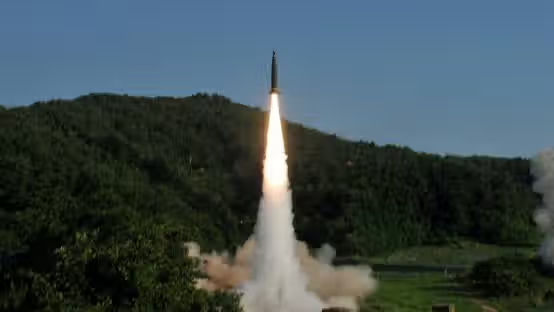
The United States has used a large share of its long-range missile inventory during the five-month war with Iran, according to information shared by sources familiar with military supply data.
Sources said the US Army used nearly all of its available Army Tactical Missile Systems, known as ATACMS, and Precision Strike Missiles, or PrSM, during the conflict. The exact number of missiles still available was not disclosed.
The report highlights the scale of military operations carried out during the war. It also raises questions about how quickly the United States can rebuild key weapons supplies after months of intensive use.
ATACMS and PrSM are among the most important long-range weapons in the US military. These missiles allow forces to strike targets from long distances while reducing risks to personnel and equipment. Military planners consider them valuable in modern warfare because they can reach targets beyond the range of many enemy defenses.
Sources also said the United States has used slightly less than half of its global supply of Tomahawk cruise missiles since the start of the war. Tomahawk missiles are widely used by US forces for precision strikes against military facilities, command centers, and other strategic targets.
The level of missile use has not been publicly reported in detail before now. The information offers a clearer picture of the resources used during the conflict and the challenges involved in maintaining military readiness.
Defense experts often view stockpile levels as an important part of national security. A large supply of precision-guided weapons helps ensure that military forces can respond quickly to future threats. When supplies fall, governments must balance current operational needs with long-term defense planning.
The long-range missile systems used during the Iran conflict are considered especially important in any future confrontation involving advanced military powers. These weapons can strike from great distances and may be needed in regions where strong air defense systems limit other military options.
The White House responded to questions about missile inventories by emphasizing the strength of US military capabilities.
President Donald Trump said the United States still possesses more munitions than any other country in the world. He also said the nation maintains supplies that exceed current military requirements.
Trump added that US defense manufacturers are increasing production at a rapid pace. According to his statement, companies are expanding factories, improving equipment, and producing munitions at levels not seen before.
The focus on production reflects a broader effort to strengthen military readiness. Defense contractors have increased manufacturing capacity in recent years as global security concerns have grown. Governments across several regions have also expanded defense spending to address rising geopolitical risks.
Another source familiar with military operations said US Central Command had nearly exhausted the land-based missile inventory it held before the war began. However, the command was able to receive additional supplies from stockpiles located in other parts of the world.
This transfer of resources helped support military operations and ensured that missile availability remained sufficient throughout the conflict. It also demonstrated the ability of the US military to move equipment and weapons across global networks when needed.
The report comes as defense officials continue to evaluate the long-term effects of the conflict on military resources. Analysts say rebuilding missile inventories may take time, even with increased production efforts.
Military planners are expected to monitor stockpile levels closely in the coming months. Production rates, future security demands, and global military commitments could all influence how quickly supplies return to desired levels.
The discussion around US Precision Missile Stocks is likely to remain an important issue as defense leaders assess readiness, manufacturing capacity, and future strategic needs. The latest figures show the significant demands placed on advanced weapons systems during a prolonged military campaign and the importance of maintaining strong reserves for future operations.
