


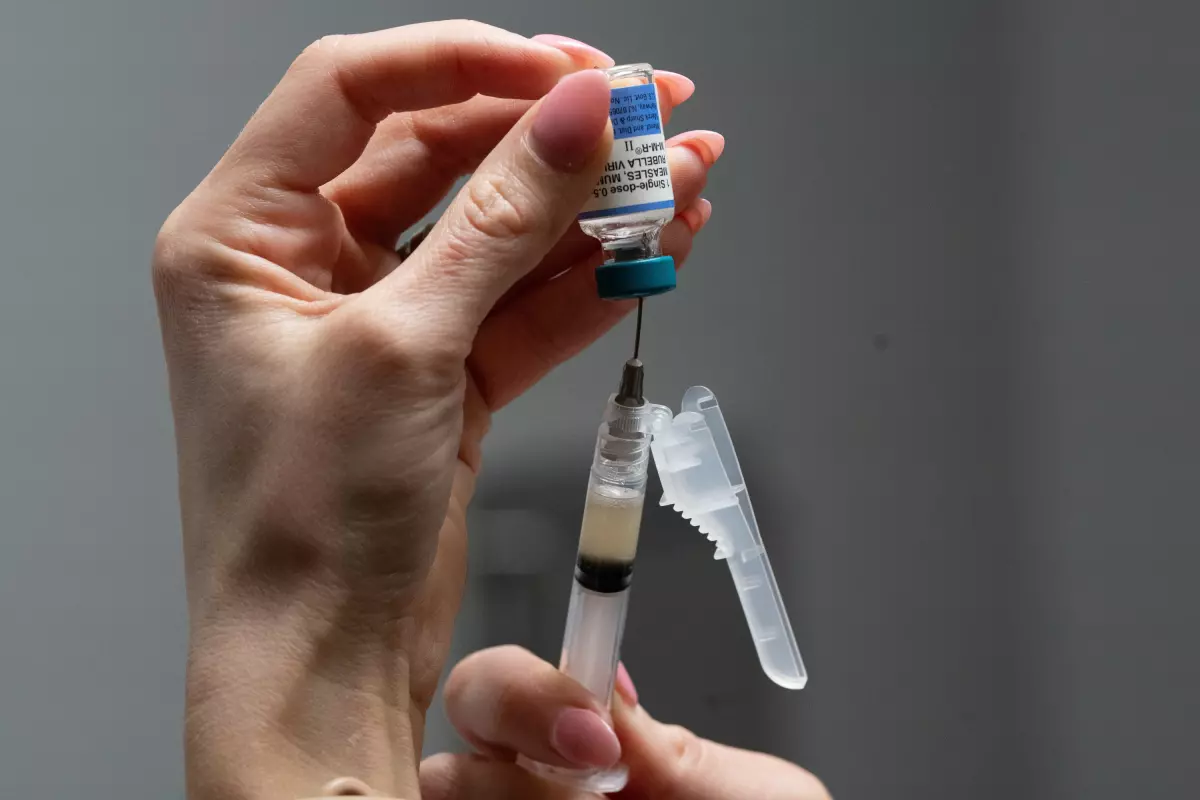
US Measles Cases Surge has reached a new milestone in 2026, with the United States reporting its highest number of measles infections in 35 years. Health data shows that more cases have been confirmed this year than in any year since 1991, marking the second consecutive year of record-breaking outbreaks.
The United States declared measles eliminated in 2000 after years of successful vaccination efforts. However, health officials say the number of cases reported over the past 18 months now exceeds the combined total recorded during the previous 25 years.
The U.S. Centers for Disease Control and Prevention (CDC) continues to receive dozens of new case reports each week. Several outbreaks that began in 2025 have continued into 2026, while new outbreaks have emerged in multiple regions across the country.
According to the latest CDC data, at least 2,318 measles cases have been confirmed in 2026. The total has already surpassed the nearly 2,300 cases reported during 2025, with more than five months still remaining in the year.
Health experts say most infections are linked to outbreaks rather than isolated cases. More than 90% of reported cases involve people who were either unvaccinated or whose vaccination status is unknown.
Children account for the majority of infections. Public health specialists continue to stress that vaccination remains the most effective protection against the highly contagious disease.
South Carolina has reported more measles cases in 2026 than any other state. A major outbreak that began in Spartanburg County in October 2025 continued through April 2026 and resulted in nearly 1,000 confirmed cases, making it one of the largest outbreaks seen in decades.
During the outbreak, public health officials carried out extensive contact tracing to identify people who may have been exposed. One investigation included a community Christmas gathering where an infected person had attended, prompting health officials to work quickly to notify participants and reduce further transmission.
Community leaders said strong vaccination rates among attendees likely helped prevent additional spread from that event. They also noted that the experience highlighted the importance of cooperation between local organizations and health authorities.
Public health officials across the country say responding to even a single measles case requires significant time and resources. Contact tracing, testing, monitoring exposed individuals, and providing public guidance often continue for weeks after a case is identified.
Several outbreaks that started in 2025 remain active in 2026. An outbreak near the Utah-Arizona border has continued for more than a year, drawing international attention because of its potential impact on the nation’s measles elimination status.
Health officials are expected to review the country’s elimination status later this year as part of international public health assessments. Continued transmission over an extended period may affect that designation.
In addition to ongoing outbreaks, 35 new outbreaks have been reported during 2026. Cases have now been identified in all but seven states, showing how widely the disease has spread across the country.
Virginia has also experienced a growing outbreak centered in Buckingham County. More than 150 cases have been linked to that outbreak. Local health departments have expanded community outreach, organized education campaigns, and worked with healthcare providers to improve early detection and response.
To improve access to care, health officials introduced mobile medical teams that visit residents at home. These teams provide testing, basic medical support, and guidance while helping reduce the need for potentially infectious individuals to visit healthcare facilities.
Pennsylvania has also reported a growing outbreak in Lancaster County, where more than 100 cases have been confirmed this year. State officials said none of the affected individuals had received the recommended two doses of the measles, mumps, and rubella (MMR) vaccine.
Health departments in several states have expanded vaccination efforts by organizing pop-up vaccination clinics, educational events, and community partnerships. Officials say increasing vaccination coverage remains the most effective way to prevent future outbreaks.
Medical experts note that measles can spread rapidly in communities where vaccination rates fall below 95%, the level generally considered necessary for strong community protection. Even states with high overall vaccination coverage may still experience outbreaks if some local communities have lower immunization rates.
Public health agencies continue to encourage eligible individuals to stay up to date with recommended vaccinations. Officials say maintaining high vaccination coverage, responding quickly to new cases, and supporting community education remain key steps in reducing the spread of measles and protecting vulnerable populations across the United States.
