


The United States has released a new report accusing Cuba of posing a significant threat to American national security, prompting strong criticism from Cuban officials and renewed debate over relations between the two countries.
The report, titled “Cuba: Capital of 21st-Century Communism,” was published by the U.S. State Department. The document argues that the Cuban government has influenced major political developments in the United States and describes Havana as a unique homeland security threat.
According to the report, Cuba has played a role in several political movements and activist organizations in the United States over recent decades. It also claims that Cuban intelligence has worked to expand its influence through various groups and networks.
The report was released during a period of heightened tensions between Washington and Havana. The United States has continued to impose sanctions on Cuba while maintaining pressure on the island’s government through economic and diplomatic measures.
Cuban officials have rejected the accusations. President Miguel Díaz-Canel criticized the report and argued that it reflects an ideological campaign against Cuba. He said the document represents what he described as a new form of political hostility toward the country.
The report also revisits historical events dating back to the Cuban Revolution in 1959. It argues that the government led by Fidel Castro supported revolutionary movements across Latin America and sought to challenge Western political influence.
In addition, the document discusses the activities of Cuban intelligence services and claims that they successfully recruited individuals and expanded operations inside the United States over several decades.
The publication has generated discussion among historians, political analysts, and academic observers. Some experts have questioned whether the report presents sufficient new evidence to support its conclusions.
Others argue that the document reflects long-standing concerns in Washington about Cuba’s intelligence activities and regional influence.
The report also examines the relationship between Cuba and several political movements in the United States. It suggests that Havana provided support or encouragement to some organizations during different periods of history.
Critics of the report say many of those movements developed independently in response to domestic social and political issues rather than foreign direction.
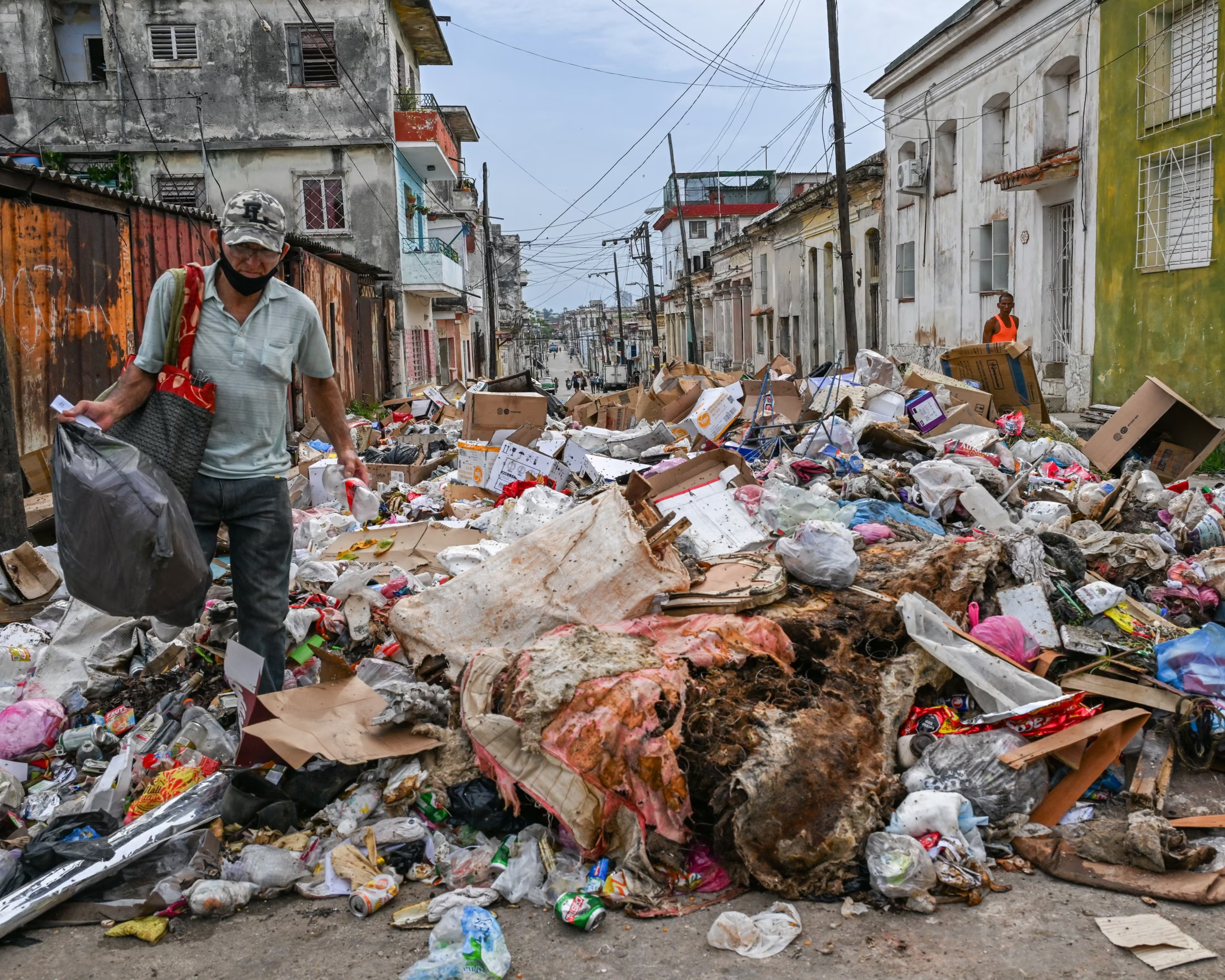
The latest publication also comes as Cuba continues to face serious economic challenges. The island has experienced shortages of food, fuel, and electricity in recent years, while many communities continue to deal with frequent power outages and economic hardship.
Many Cuban citizens have expressed concern about rising living costs, shortages of basic goods, and the country’s difficult economic conditions.
Supporters of the U.S. report argue that national security concerns should be evaluated separately from Cuba’s economic situation. They maintain that intelligence operations and political influence activities remain important issues regardless of the country’s financial difficulties.
The report concludes that Cuban-linked organizations continue to represent a significant source of foreign influence within the United States.
The Cuban government strongly rejects those claims and continues to argue that Washington’s sanctions and economic restrictions have contributed to the country’s current economic crisis.
The publication has added another point of disagreement in an already difficult relationship between the United States and Cuba. Diplomatic ties between the two countries have remained strained for years because of differences over sanctions, human rights, political systems, and regional security.
As both governments maintain sharply different positions, the report is expected to fuel further debate over U.S. policy toward Cuba and the future of relations between the neighboring countries.
