


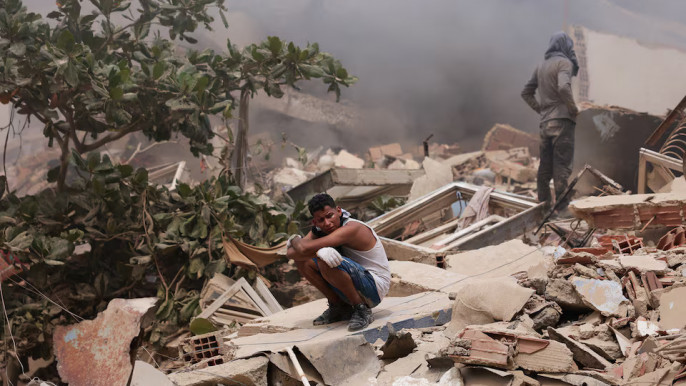
The death toll from the Venezuela earthquake crisis has climbed above 5,000 after two powerful earthquakes struck the country last month. Officials also confirmed that Venezuela has received hundreds of millions of dollars from the International Monetary Fund to help rebuild damaged areas and support people affected by the disaster.
The latest official figures show that 5,069 people lost their lives in the disaster. The number of injured remains at 16,740. Thousands of families are still struggling after losing their homes, while rescue and recovery work continues across the hardest-hit areas.
The twin earthquakes struck on June 24. The first measured 7.2 in magnitude. A second, stronger quake measuring 7.5 followed less than one minute later. The powerful back-to-back tremors caused widespread destruction across the northern coastal state of La Guaira.
Many buildings collapsed during the shaking. Roads cracked, public services failed, and entire neighborhoods suffered heavy damage. Emergency crews have spent weeks clearing debris and helping survivors recover what they can from destroyed homes.
Officials said most of the deaths happened in La Guaira. The coastal state sits just north of the capital, Caracas, and faced the strongest impact from the earthquakes. Many communities there continue to deal with damaged roads, broken utilities, and unsafe buildings.
Authorities reported that the number of injured has not changed since the last update. Many people who needed medical care have already left hospitals after receiving treatment. Health workers continue to monitor patients with serious injuries while also providing support to families affected by the disaster.
Thousands of people remain without permanent shelter. Around 20,000 survivors are now living in temporary camps. Many of these camps are crowded and lack enough clean water and proper sanitation. Aid workers continue to provide food, drinking water, and medical supplies, but demand remains high.
Government officials said rebuilding homes, schools, hospitals, and public infrastructure will require major financial support. Recovery efforts are expected to continue for many months as engineers inspect damaged buildings and construction teams begin repairs.
Interim President Delcy Rodriguez announced that Venezuela has accessed 346 million dollars from the International Monetary Fund to help fund earthquake recovery projects. The money will support reconstruction work and help address urgent humanitarian needs across affected communities.
The head of the International Monetary Fund, Kristalina Georgieva, confirmed that the funds were released. She said the organization worked with its partners so Venezuela could access its own financial resources held at the institution. She explained that the money came from the country’s reserve tranche, which allows members to draw on available resources during emergencies.
Venezuela currently holds 3.568 billion Special Drawing Rights at the International Monetary Fund. That amount is worth about 5.1 billion dollars. These reserve assets can help countries strengthen their financial position during times of crisis.
Access to those resources had previously been blocked because the International Monetary Fund did not recognize Nicolas Maduro as Venezuela’s president. That position prevented the country from using part of its available financial reserves for several years.
Earlier this year, relations between Venezuela and major international financial institutions changed. In April, the International Monetary Fund and the World Bank announced they were restoring relations with the country. The move followed political changes that came after Nicolas Maduro was removed from power during a military operation in January.
The renewed relationship has allowed Venezuela to regain access to financial support that had been unavailable since 2019. Officials believe this funding will help speed up recovery projects and improve conditions for people still affected by the earthquakes.
Emergency teams continue to work in damaged communities while engineers inspect buildings for safety. Aid organizations are also focused on improving conditions inside temporary camps, where many families continue to wait for permanent housing.
As recovery efforts move forward, authorities say restoring homes, public services, and local infrastructure remains the country’s highest priority. The newly released funding is expected to play a key role in helping communities rebuild after one of Venezuela’s deadliest natural disasters in recent history.
