


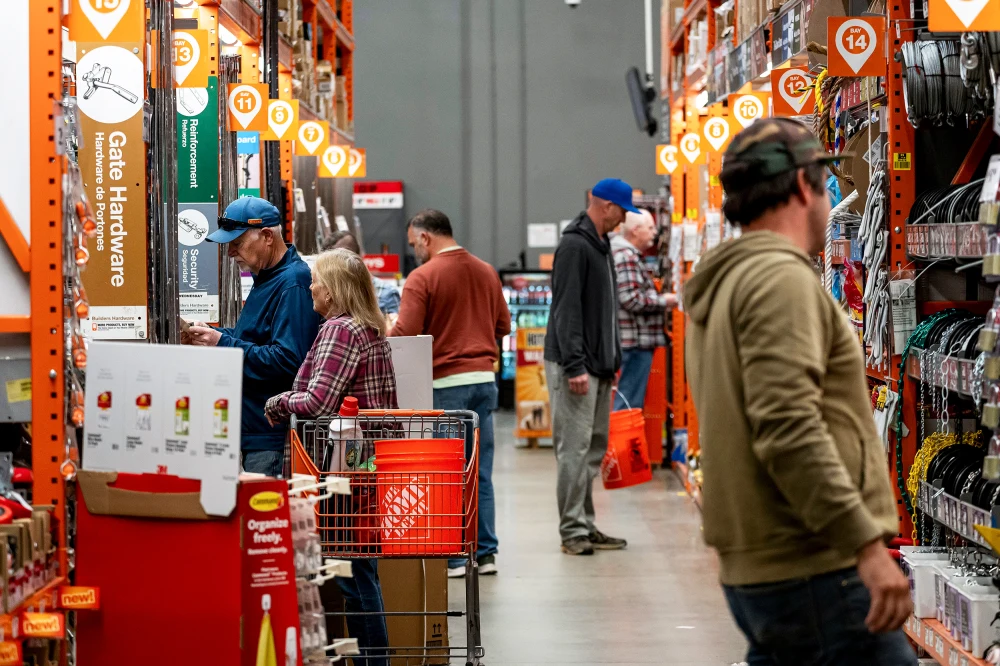
The United States is preparing for a key test of consumer health as four major retailers release their quarterly earnings this week. Walmart, Target, Home Depot, and Lowe’s will provide fresh data on whether American households are starting to struggle under rising prices and higher borrowing costs.
The results are expected to give one of the clearest pictures yet of how consumers are managing inflation, expensive fuel, and costly credit conditions. Economists say the reports will help show whether shoppers are still spending normally or beginning to cut back on non-essential goods.
Retailers are under pressure as inflation continues to affect daily life. Higher gas prices have increased transport and food costs, while interest rates remain elevated. These combined pressures are making it harder for many families to keep up with regular expenses.
Analysts will closely watch company earnings calls for signs of consumer behavior changes. They want to know if shoppers are trading down to cheaper brands, delaying home repairs, or reducing spending on leisure and entertainment. These patterns could signal growing financial stress.
Home Depot will be the first to report results, offering early insight into the housing and home improvement market. Mortgage rates in the U.S. remain high, with the average 30-year fixed rate recently around 6.68%. This has slowed home-related spending, as higher financing costs reduce demand for large projects.
Recent data shows that overall consumer spending is still rising, but not evenly across income groups. A report from the Bank of America Institute found that debit and credit card spending per household increased by 4.8% in April compared to the same period last year. This was the strongest monthly increase in three years.
However, economists say this growth hides deeper differences in spending behavior. A widening “K-shaped economy” is emerging, where higher-income households continue to spend strongly, while lower- and middle-income families reduce non-essential purchases.
Wealthier households have benefited from rising stock markets and increased home values. This has helped them maintain strong spending levels, especially on travel, dining, and luxury goods. In contrast, lower-income households are cutting back on entertainment, restaurants, and other discretionary categories.
Inflation remains a key concern. Prices rose about 3.8% in April, while wage growth was slightly lower at 3.6%. This gap means many workers are effectively losing purchasing power, increasing financial pressure on households that already operate on tight budgets.
Economists warn that if this gap continues to widen, it could create greater challenges for the U.S. economy. Reduced spending from lower-income households could slow overall growth, even if higher-income consumers continue to spend at stable levels.
At the same time, the Federal Reserve is expected to keep interest rates higher for longer to control inflation. Higher borrowing costs affect everything from credit cards to car loans and mortgages. This makes it more expensive for both consumers and businesses to borrow money.
Some analysts say households still have limited support from savings and tax refunds, but these buffers are unevenly distributed. That means financial pressure is felt more strongly by certain groups, even if national spending numbers appear stable.
The upcoming earnings reports will help answer a key question: are American consumers still resilient, or are they finally beginning to pull back under sustained economic pressure? The answer could influence future interest rate decisions and broader economic policy.
For now, all eyes are on retail giants as they reveal whether spending strength in the U.S. economy is holding steady or starting to weaken under the weight of inflation.
