


Six months after President Donald Trump warned US states to avoid regulating artificial intelligence, state governments are moving ahead with new laws that shape how AI is used in daily life. The growing push highlights a widening gap between federal and state approaches to AI oversight.
At the federal level, Congress has so far failed to pass comprehensive AI legislation. This has left states to act on their own, leading to a growing patchwork of rules focused on safety, transparency, and consumer protection.
State lawmakers are increasingly targeting specific risks linked to AI. These include how chatbots interact with children, how employers use AI in hiring decisions, and how companies prevent harmful or catastrophic system failures.
Earlier attempts to introduce broad AI laws were often blocked or vetoed by governors who worried about limiting innovation. However, newer laws are more focused and targeted, making them more politically acceptable in many states.
President Trump has pushed for stronger federal control over AI regulation. He argues that too many state-level rules could slow down innovation and weaken the United States’ position in the global AI race, especially against China.
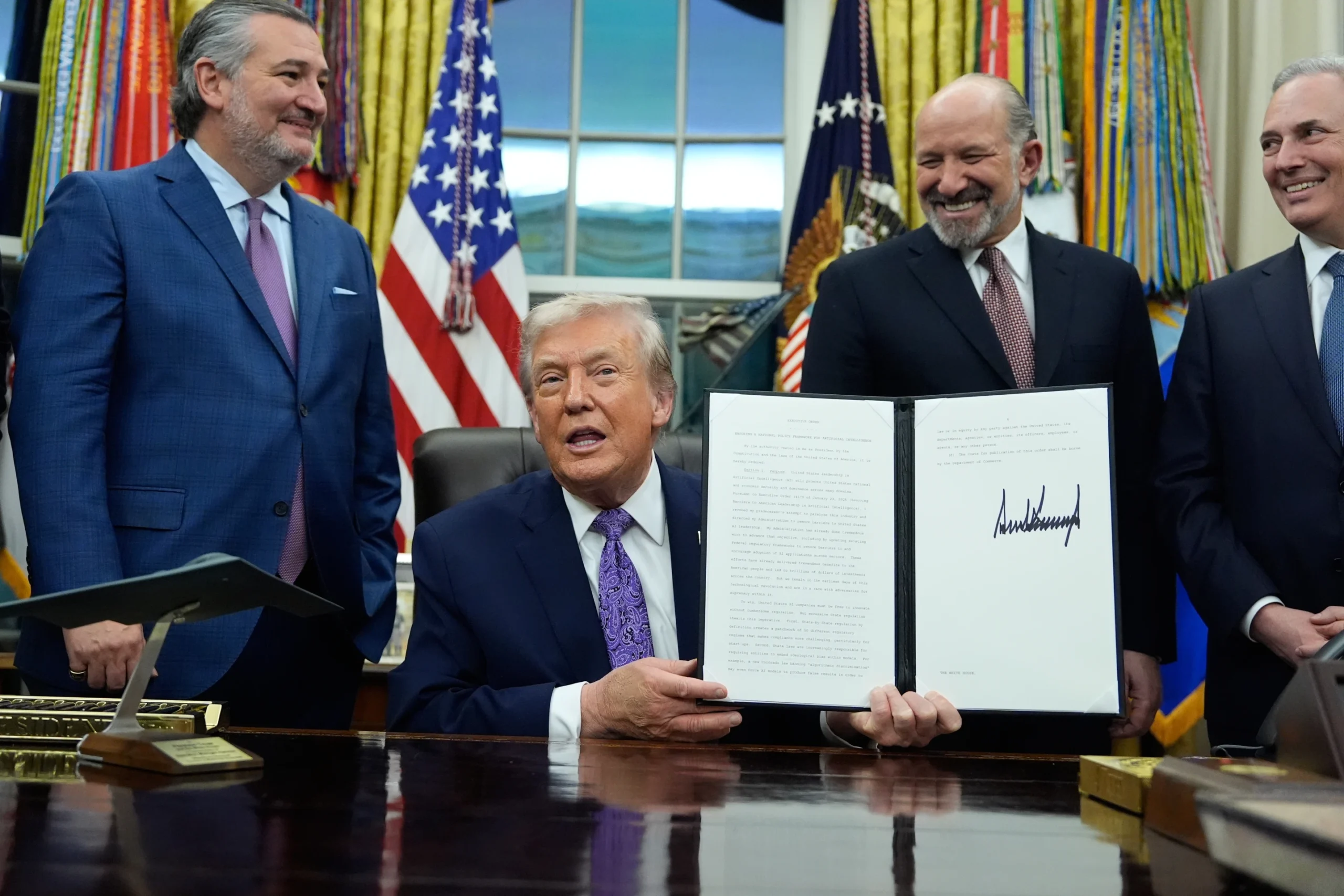
To support this approach, the White House issued an executive order directing federal agencies to review state laws that may be overly restrictive. It also suggested that federal funding programs could be limited for states with strict AI rules. However, officials have not yet taken major enforcement action.
Instead, the administration released a national policy framework encouraging Congress to create unified AI laws. It also calls for federal rules focused on child safety, intellectual property protection, and free speech online.
Despite federal pressure, states appear largely undeterred. More AI-related bills have been introduced this year compared to last year, according to policy researchers. Both Republican- and Democratic-led states are participating in the effort.
Illinois is one of the leading examples of state-level action. A bill currently under consideration requires AI developers to implement safeguards to prevent major risks, including cyberattacks, power failures, or even biological threats linked to misuse of AI systems.
The Illinois proposal also requires independent audits to ensure companies follow their own safety rules. Supporters say this is an important step toward holding AI developers accountable for real-world risks.
State Senator Mary Edly-Allen, who sponsored the Illinois bill, said the state is prepared to move forward regardless of federal pressure. She emphasized that states will continue shaping their own policies if national rules remain absent.
Other states have focused on how AI affects consumers in everyday life. Several laws now require companies to clearly disclose when users are interacting with AI systems instead of humans.
A growing number of states are also regulating AI chatbots, especially those used by children. Laws in states such as Colorado, Connecticut, Idaho, Iowa, Nebraska, and Oregon include limits on chatbot behavior and stronger parental controls.
Some rules require companies to prevent harmful interactions between chatbots and minors. Others give parents more control over how their children use AI tools and what data is collected.
Connecticut has introduced additional protections for “companion chatbots” that build ongoing relationships with users. These rules aim to ensure safety measures are in place, especially for younger users.
Colorado has also passed laws requiring companies to disclose when AI is used in important decisions such as hiring, education, housing, or banking. This is aimed at improving transparency in systems that affect people’s lives.
Lawmakers say these measures are designed to address bias in AI systems. Many AI tools rely on large datasets that can unintentionally influence decisions about employment, loans, or healthcare access.
Several states, including Washington, Utah, and Connecticut, now require digital watermarking or labeling of AI-generated content. This allows users to identify whether images, videos, or text were created or altered by artificial intelligence.
California is also considering new laws that would limit how employers use AI in workplace decisions. One proposal would prevent companies from relying solely on AI systems to fire or discipline employees.
Not all states are moving forward with regulation. In Florida, lawmakers blocked a proposal backed by Governor Ron DeSantis that would have expanded AI oversight and required stronger consumer protections.
Utah also saw delays after federal officials expressed opposition to proposed legislation. This shows that some Republican-led states remain cautious about acting against federal preferences.
Despite these differences, the overall trend shows rising state involvement in AI regulation. With no unified federal law in place, states are shaping their own rules, leading to a fast-changing and uneven regulatory landscape across the country.
