


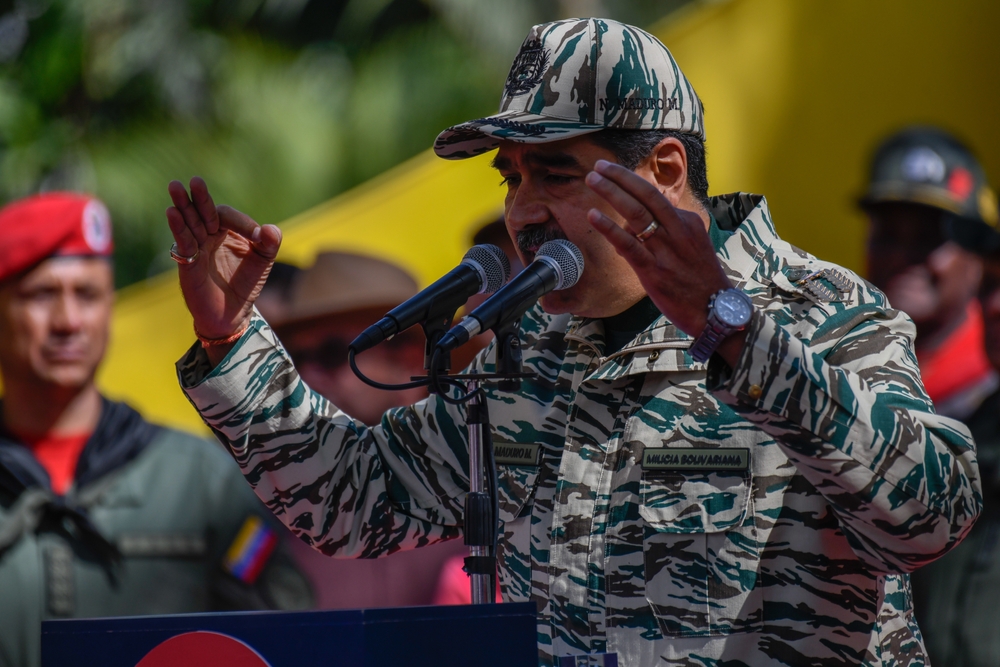
In a stunning international development, US forces arrested Venezuelan President Nicolás Maduro and his wife, Cilia Flores, in Caracas and transported them to New York to face criminal charges. The operation, involving multiple branches of the US military, has sent shockwaves around the world and marks an unprecedented escalation in American intervention in South America.
President Donald Trump announced that the United States would assume temporary control of Venezuela, saying Washington would manage the country until a “safe, proper, and judicious transition” could be arranged.
“We can’t take a chance that somebody else takes over Venezuela who doesn’t have the good of the Venezuelan people in mind,” Trump said during a press conference at Mar-a-Lago.
US Assumes Interim Control
Trump outlined plans for a US-led interim administration, naming Secretary of State Marco Rubio, Defense Secretary Pete Hegseth, and Chairman of the Joint Chiefs of Staff General Dan Caine as key figures. However, he offered few details about the logistics of governing Venezuela or how the transition would unfold.
At the same news conference, Trump claimed that Venezuela’s vice president, Delcy Rodríguez, had been sworn in as Maduro’s successor and was willing to cooperate with US plans. Venezuelan authorities, however, have made no official statement confirming Rodríguez’s swearing-in.
Trump also hinted at the possibility of further military operations, stating, “We’re not afraid of boots on the ground,” and announced plans for US oil companies to rebuild Venezuela’s damaged infrastructure, particularly its energy sector.
Legal Justification and Controversy
Secretary of State Rubio defended the operation, saying it did not require Congressional approval because it was a law enforcement mission supported by the military. “This was not the kind of mission you can do congressional notification on,” he said. Rubio also noted that Maduro had been indicted in the US in 2020 and labeled him a fugitive from American justice with a $50 million reward.
The operation drew immediate criticism from Democrats, including Senator Mark Warner, who warned it set a dangerous precedent for international norms. “If the United States asserts the right to use military force to capture foreign leaders it accuses of crimes, what stops China from doing the same over Taiwan or Russia in Ukraine?” Warner said. He also called the move hypocritical, contrasting it with Trump’s earlier pardon of former Honduran President Juan Orlando Hernández, who had been convicted of drug trafficking.
Support and Risks Ahead
Republicans largely praised the action. Senator Roger Wicker, chairman of the Senate Armed Services Committee, called the arrest “the culmination of a monthslong effort to degrade the narco-terrorist organizations that Maduro oversaw” and urged Venezuelans to work toward peace and prosperity.
Analysts, however, cautioned that the operation could destabilize the country. Daniel DePetris of Defense Priorities warned of potential outcomes including a split in the military, expansion of criminal groups, civil war, or the rise of an even more authoritarian leader. “Whether this leads to positive change or long-term instability remains to be seen,” he said.
The Trump administration has previously justified actions against Maduro for various reasons, including countering drug trafficking, reclaiming US-claimed oil resources, and promoting democracy. DePetris noted that, in reality, Venezuela is a deeply weakened state with a collapsing economy, and the move may carry more risk than immediate strategic benefit.
