


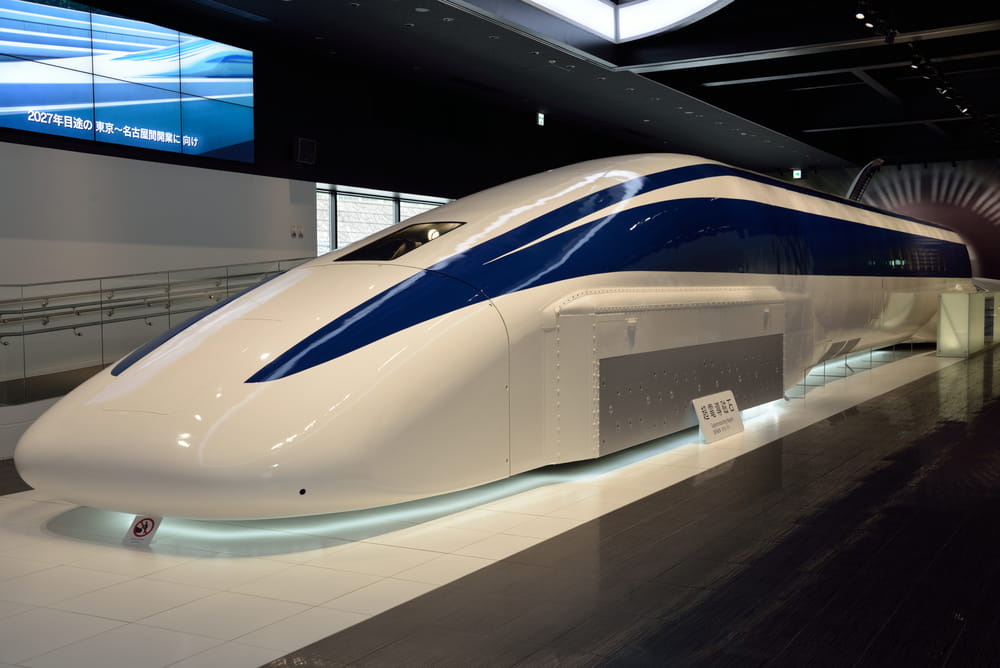
Japan is developing the L0 Series, the world’s fastest train, capable of reaching 603.5 km/h. Built by Central Japan Railway Company, the magnetic-levitation train will far exceed current high-speed rail, including China’s Shanghai Maglev and Europe’s fastest services such as the TGV and AGV Italo.
The L0 Series is designed for the Chūō Shinkansen line, cutting travel between Tokyo and Nagoya to about 40 minutes, with Tokyo–Osaka eventually taking around one hour. The technology relies on maglev, lifting the train above the track to reduce friction and allow extreme speeds.
However, exporting this concept to Europe is unlikely. The system requires entirely new, tunnel-heavy infrastructure, cannot use existing rail lines, consumes significantly more power, and has lower passenger capacity than conventional European trains. Costs have already reached about £52bn (€60bn), and the project has been delayed, with opening now expected in the mid-2030s.
In Europe, rail travel often prioritises comfort, capacity and integration over maximum speed, making an ultra-fast maglev a poor fit outside a few business-only corridors.
