


Renewed Focus on European Security
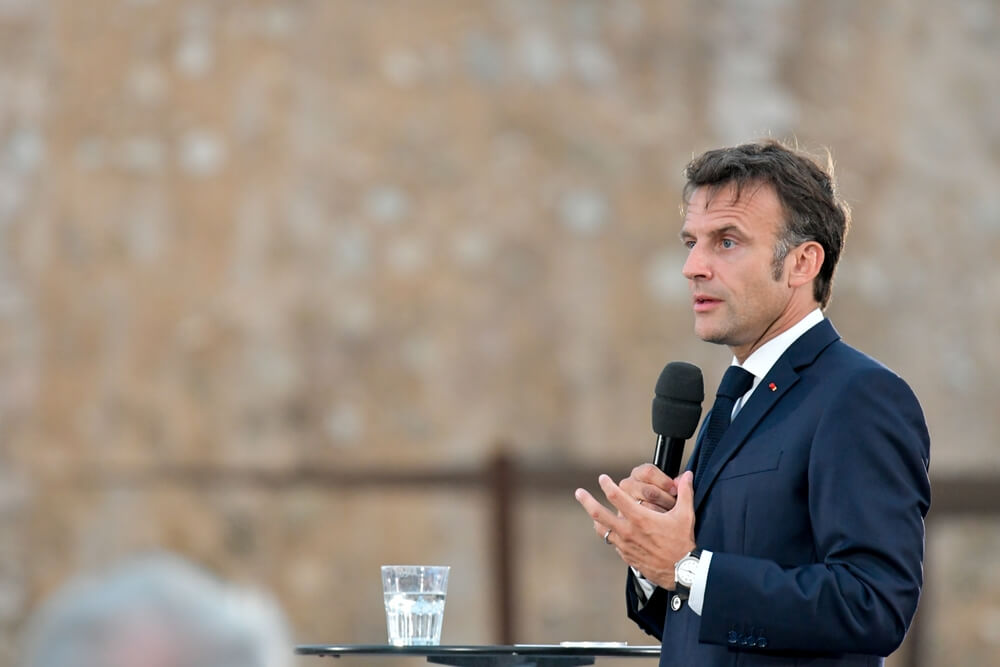
President Emmanuel Macron is set to outline France’s plans to extend its nuclear deterrent to European partners, a proposal first floated in 2020 but largely ignored at the time. Speaking from the Île Longue peninsula, home to France’s four nuclear-powered ballistic missile submarines, Macron will stress that France’s expanded role would complement, not replace, the protection provided by the United States.
Macron previously suggested involving willing European countries in exercises and strategic discussions, and earlier this year at the Munich Security Conference he confirmed he had been in talks with German Chancellor Friedrich Merz and other EU leaders to align national doctrines on nuclear deterrence.
Geopolitical Shifts Drive Interest
European interest in France’s nuclear capability has grown amid dramatic global changes. Russia’s invasion of Ukraine exposed vulnerabilities in Europe’s defence, while developments in Washington under Donald Trump have caused some leaders to question the US commitment to European security. Trump’s threats regarding Greenland and the US focus on the Indo-Pacific have heightened concerns about America’s long-term presence in Europe.
At the same time, the modernization of Russian hypersonic missiles, China’s expanding arsenal, and uncertainty over Iran have created what French sources call “a period fundamentally conducive to nuclear proliferation.” Macron’s initiative is intended to address these concerns while making clear it does not compete with NATO’s collective defence.
Maintaining a Measured Approach
France follows a “strict sufficiency” nuclear policy, keeping roughly 300 warheads — far fewer than the US or Russia — enough to guarantee unacceptable damage to any aggressor. French officials emphasize that their strategy is defensive and does not aim to spark an arms race.
Paris has also strengthened cooperation with the UK under the Northwood Declaration, establishing a Nuclear Steering Group and coordinating exercises to ensure both countries’ arsenals are aligned and politically guided. Macron’s upcoming speech is expected to signal a significant moment in Europe’s strategic planning, highlighting France’s willingness to take a more active role in regional nuclear security.
