


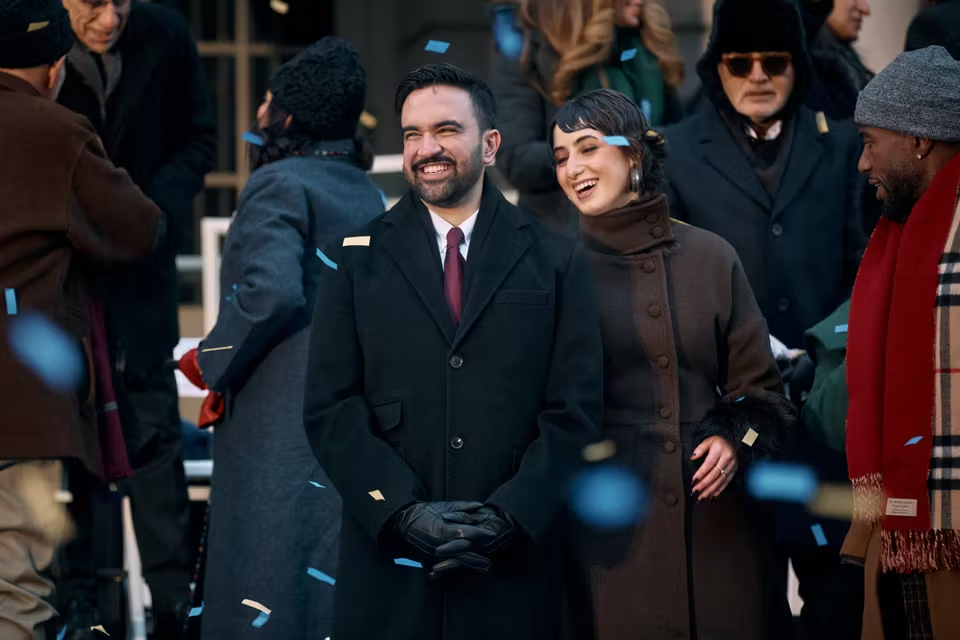
Zohran Mamdani has officially been inaugurated as New York City’s mayor, marking a historic moment in the city’s history. He is the first Muslim, first South Asian, and first openly Socialist mayor of New York City.
Mamdani’s election reflects a shift in voter priorities. Citizens are seeking leaders who emphasize practical solutions for daily challenges, including affordable housing, public services, and community engagement. His agenda focuses on ensuring that city resources are accessible to all residents.
During the inauguration, Mamdani highlighted the importance of civic empowerment. He pledged to involve communities directly in decision-making processes and to increase transparency in city governance. This approach aims to strengthen public trust and ensure policies address the needs of all neighborhoods.
Mamdani’s rise to the mayor’s office also symbolizes a milestone for representation. His victory shows that New Yorkers value diverse leadership and are open to new political perspectives. Analysts say this could inspire similar movements in other major cities across the U.S.
The new mayor has promised to prioritize affordable housing and public services. He plans to expand support for local programs, improve public transportation, and ensure that health and education resources are more accessible to residents across the city.
Community leaders have welcomed Mamdani’s inauguration. Many emphasize that his focus on inclusivity and practical governance aligns with the growing demand for results-driven leadership. His policies are expected to balance progressive ideals with actionable solutions.
Mamdani’s background in activism and public service shapes his approach to city leadership. He has worked on initiatives addressing economic inequality, climate resilience, and social justice, which he plans to continue at a larger scale as mayor.
Observers note that his administration could signal a broader political shift in New York City. The emphasis on transparency, accountability, and citizen engagement may influence how future leaders approach governance in urban centers.
Public confidence in Mamdani is bolstered by his commitment to collaboration. He has expressed a willingness to work with community organizations, city officials, and state representatives to implement policies effectively. This pragmatic approach aims to deliver tangible results for all New Yorkers.
Mamdani’s historic inauguration also reflects changing demographics and political attitudes in New York City. Voters are increasingly prioritizing leadership that combines experience, expertise, and inclusivity, showing that diverse voices can shape policy at the highest level.
As Mamdani begins his tenure, residents and analysts alike will watch closely how his administration handles pressing issues like housing affordability, economic opportunity, and civic engagement. His success could serve as a model for future urban governance.
The inauguration of Zohran Mamdani is more than a ceremonial event. It represents a milestone in representation, civic involvement, and political pragmatism. His leadership is expected to bring fresh perspectives and practical solutions to New York City, while empowering communities to play a greater role in shaping their city.
