


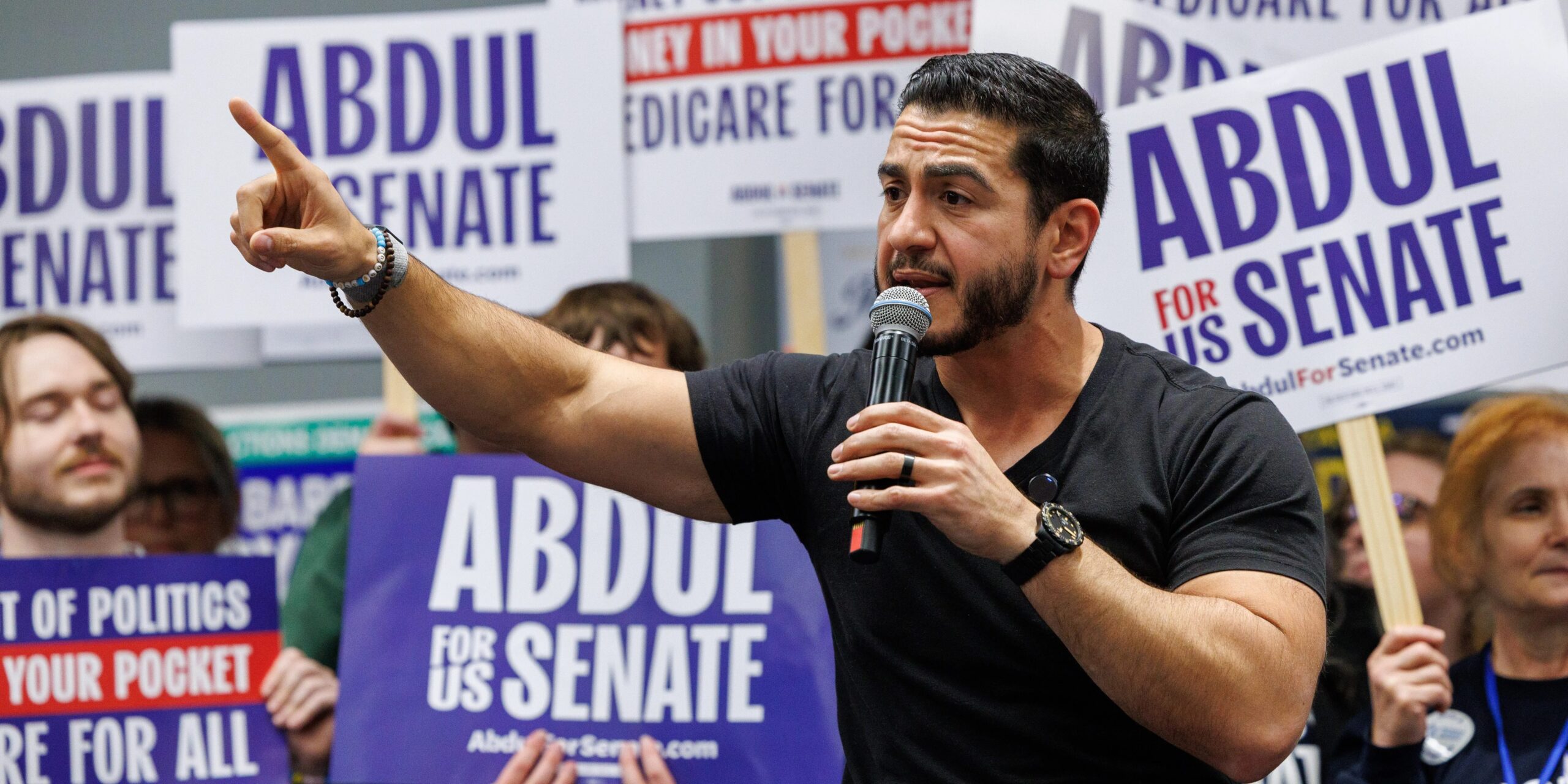
Abdul El-Sayed has secured a major victory in Michigan’s 2026 Senate election, giving Democrats another important win in a key political battleground. The race against Republican candidate Mike Rogers was called early Wednesday after months of intense campaigning. El-Sayed celebrated the result by saying voters had rejected a campaign built around personal attacks rather than important public issues.
Speaking after the result, El-Sayed said he was running on adrenaline and caffeine following the demanding election campaign. His victory adds to the Democratic Party’s success in the midterm elections, as the party gained a substantial majority in the Senate.
The Michigan race attracted national attention because of the political attacks directed at El-Sayed throughout the campaign. Born in the United States to parents who immigrated from Egypt, he faced repeated criticism from Republican figures over his background and political positions.
President Donald Trump repeatedly called El-Sayed a “jihadist” and accused him of being on the side of terrorists. These remarks became part of a wider Republican effort to challenge his candidacy and raise concerns about his views.
El-Sayed strongly rejected the approach taken by his opponents. He argued that Michigan voters were more interested in practical issues than personal attacks or attempts to divide communities.
“Michigan proved just how big we are. Rejected a hateful, spiteful campaign that had nothing to say about the issues and only wanted to point to my name and my face,” El-Sayed said.
He added that voters across the state had pushed back against the campaign directed at him. According to El-Sayed, every county moved in a more Democratic direction compared with the previous presidential election.
His victory also carries historic importance. El-Sayed will become the first Muslim senator in United States history. The achievement marks a major moment for Muslim representation in the country’s national government.
However, El-Sayed said making history was not the main reason he entered the race. During a phone interview, he explained that his immediate thoughts after the result were about his family and what the victory would mean for his two young daughters.
He described Wednesday morning as a moment for reflection after the long campaign. He also spoke about how his children understood the result in different ways.
His 3-year-old daughter, he said, had little understanding of what had happened. His 8-year-old daughter understood more but viewed the achievement as something normal.
El-Sayed said his children would eventually learn about the historic nature of the victory through their history books. For them, the result may become a part of their understanding of American politics and representation.
The election campaign also exposed the deep political divisions surrounding identity and immigration in the United States. El-Sayed’s parents came to the country from Egypt, but he was born in America. His background became a major subject of political debate during the race.
The senator-elect argued that voters had looked beyond those attacks and focused on the issues facing their communities. His comments suggested that the election result was also a response to the tone of the Republican campaign.
The relationship between the two candidates appeared strained even after the election. As of Wednesday afternoon, Rogers and El-Sayed had not spoken directly, despite Rogers issuing a statement conceding the race.
This was different from the 2024 Michigan Senate election. In that contest, Republican Mike Rogers called then-Representative Elissa Slotkin on Wednesday morning to concede before the race had officially been called.
The latest voting figures showed El-Sayed with a clear advantage. With approximately 97 percent of ballots counted, he held a seven-percentage-point lead over Rogers.
The county-level results also showed a broad shift toward Democrats. Voting data indicated that every county in Michigan moved in the Democratic direction compared with 2024.
Michigan remains an important state in national elections because of its competitive political landscape. The Democratic victory therefore carries significance beyond the Senate seat itself.
For El-Sayed, the next challenge will be moving from an election campaign into national office. He will have to represent voters across Michigan while addressing the concerns raised during the race.
The Abdul El Sayed Michigan Victory has also created a historic milestone for Muslim Americans. His election reflects a significant change in the country’s political representation, while his comments highlight the divisions that shaped the campaign.
As he prepares to begin his Senate career, El-Sayed has made clear that he views the result as more than a personal achievement. He says Michigan voters have sent a message about political division, representation and the issues they expect their elected leaders to address.
