


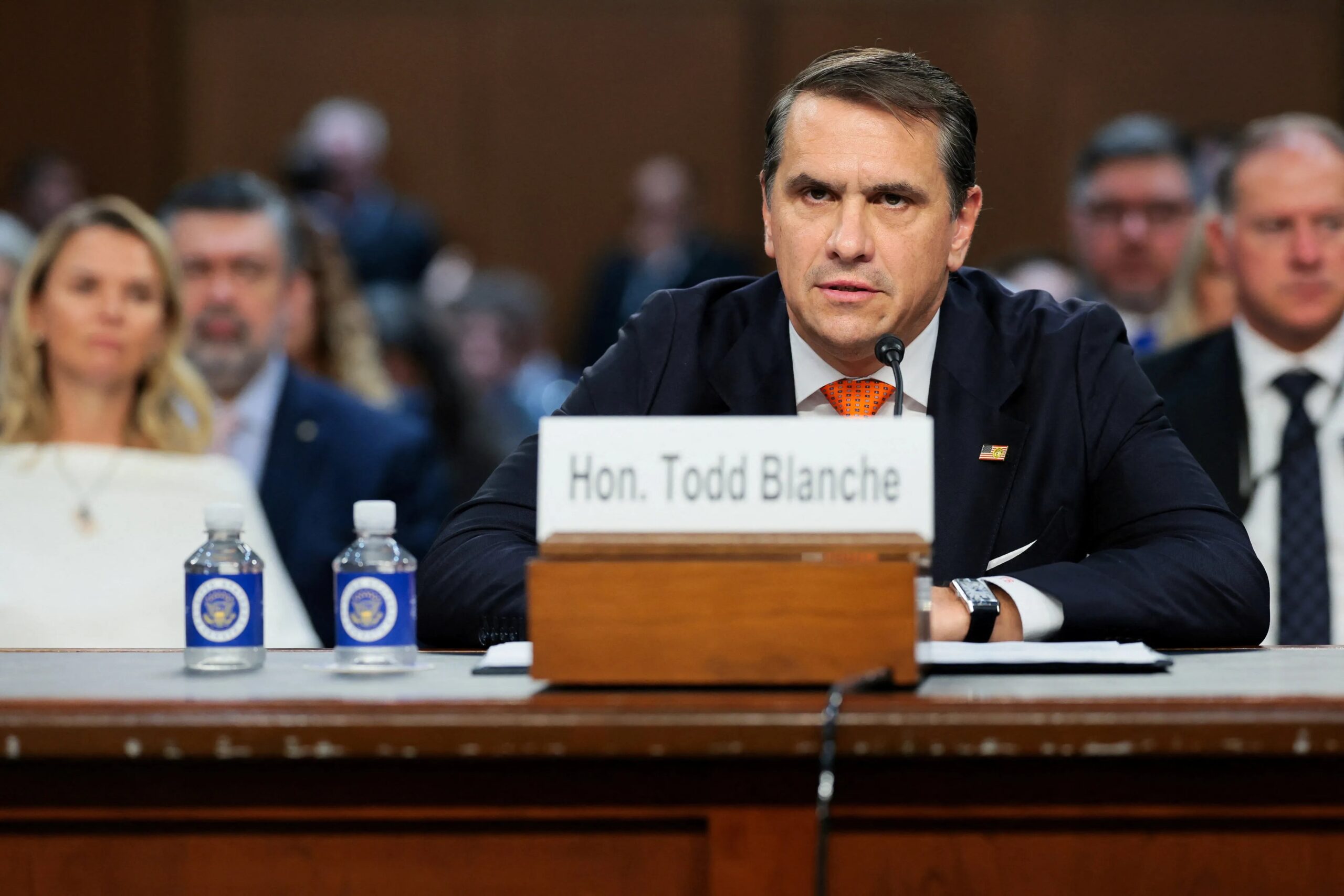
U.S. Attorney General Todd Blanche has refused to rule out federal action in state election certification processes ahead of the midterm elections. He said extreme situations could lead the Department of Justice (DOJ) to consider stepping in. However, he stressed that he was not seeking to interfere with elections.
Blanche spoke to reporters in Virginia on Thursday. He was asked whether the federal government could intervene if states faced disputes over election results. He said he could imagine an extreme case that might require action but would not make firm claims about what could happen in the future.
He described such a case as a possible “doomsday scenario.” Blanche said he could not predict every situation that might arise. He also refused to promise that the DOJ would never become involved in a state’s election process.
At the same time, Blanche said he was not planning his work around stopping the certification of election results. He denied that he intended to prevent states from confirming their results after voters cast their ballots.
His comments come amid growing concern over the Trump administration’s approach to election rules. The DOJ has filed lawsuits against states over voter records and the handling of ballots. These cases have raised questions about the limits of federal power and the role of state officials in running elections.
During a news conference in Norfolk, Virginia, Blanche was asked about lawsuits seeking access to voter data and changes to how states handle ballots. The department has argued that some voter records should be shared in full and that ballots linked to people it considers likely noncitizens should face further checks.
Blanche said the government was not trying to create chaos. He argued that the DOJ wanted to alert election officials to possible problems and ensure that only eligible people vote.
He said the goal was to give Americans confidence that voting rules were being followed. The department, he added, was not trying to stop states from certifying election results.
Yet federal involvement in state election procedures is limited by the Constitution and federal law. State and local officials are mainly responsible for running elections, counting ballots and certifying results. The federal government has a role in protecting voting rights and prosecuting violations of federal election laws.
Federal law does not give the DOJ broad power to delay state certification or reject ballots simply because the department questions a voter’s eligibility. Any attempt to intervene would need a valid legal basis and could face challenges in court.
Blanche’s refusal to rule out all possible action has drawn a sharp response from Democrats. Senate Minority Leader Chuck Schumer said Democrats had been preparing for months and would be ready for any steps the administration might take.
Schumer accused President Donald Trump and his allies of trying to undermine the election. In a post on X, he said elections must remain in the hands of voters rather than the president.
The dispute comes as the DOJ pursues legal action against California election officials. Last week, the department argued that state officials had not acted quickly enough to review names that federal authorities identified as likely noncitizens.
The DOJ asked a judge to block California from counting mail-in ballots linked to those individuals unless their eligibility could be confirmed. The case has raised concerns about the timing of the request and its possible impact on the state’s vote count.
California officials and their legal allies have challenged the federal government’s approach. They argue that states have a central role in managing elections and that sudden changes could disrupt the process. The dispute also raises questions about the evidence used to identify people as likely noncitizens.
The Trump administration has repeatedly claimed that noncitizen voting threatens election security. However, studies and criminal cases have found that such voting is rare. The issue remains a point of conflict between the administration and its political opponents.
The DOJ says its actions are aimed at protecting the integrity of elections and enforcing federal law. Critics argue that efforts to obtain sensitive voter data or restrict ballots could go beyond the department’s legal authority.
Blanche’s remarks leave open the possibility of federal action in an extreme case, but he has not announced a plan to intervene in state certification. His comments also do not establish that the DOJ has the power to take any specific action.
As the midterm elections approach, state officials, lawmakers and voters will be watching how the department handles election disputes. Any federal move to affect certification could lead to new legal challenges over the balance of power between Washington and the states.
