


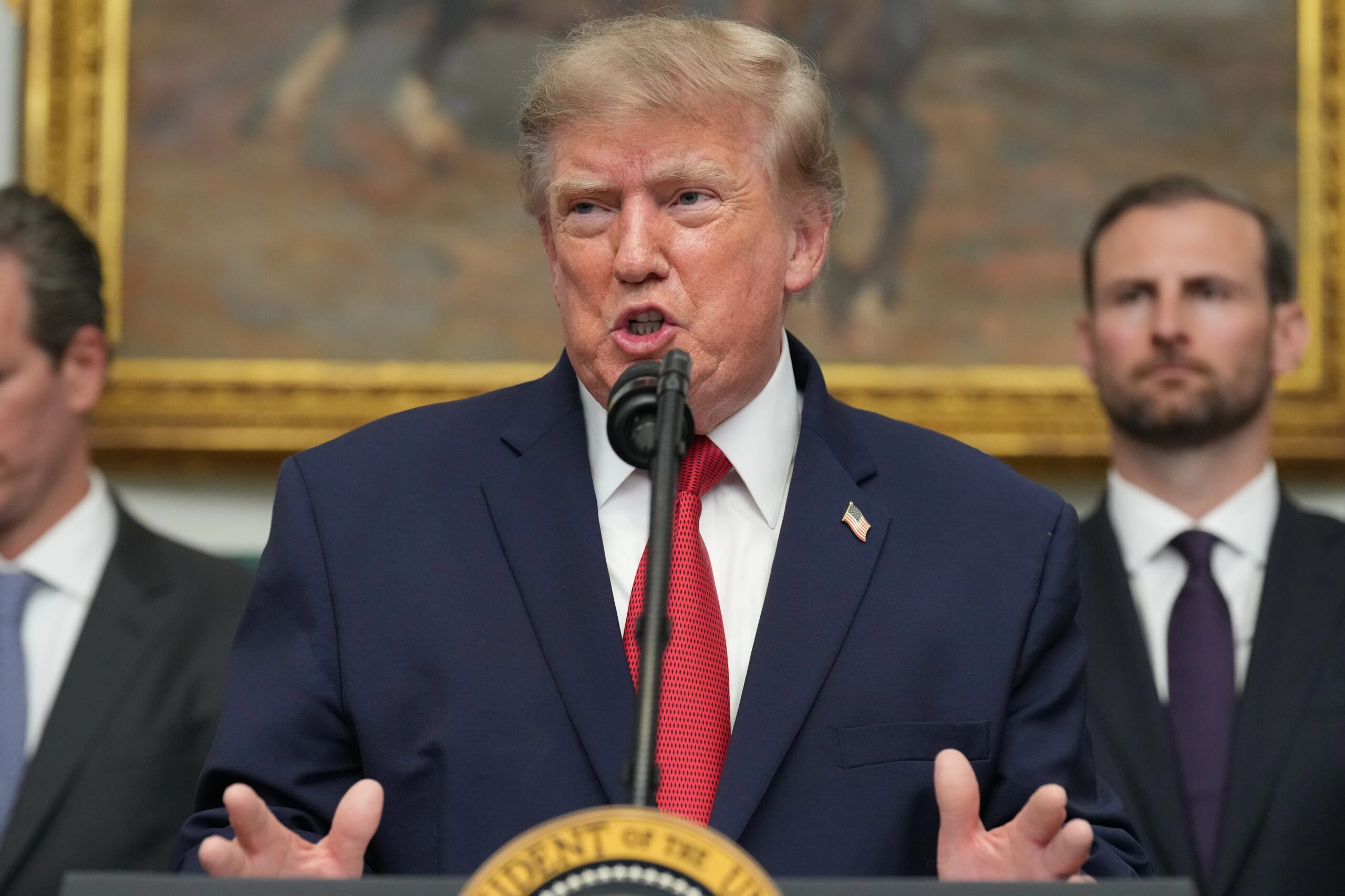
President Donald Trump has intensified the trade dispute between the United States and Canada by turning to a little-used section of a decades-old tariff law that could lead to restrictions on a range of Canadian products.
The latest move marks a significant escalation in a trade conflict that has already strained economic relations between the two neighboring countries. The action could affect imports of Canadian dairy products, many alcoholic beverages, and motorcycles, adding new pressure to an already tense trade environment.
At the center of the dispute is Section 338 of the Tariff Act of 1930, a provision that has rarely been used in modern trade policy. The law was enacted during the administration of President Herbert Hoover and is widely associated with the Smoot-Hawley Tariff Act, one of the most controversial pieces of trade legislation in American history.
Economists often point to the Smoot-Hawley tariffs as a major factor that worsened global economic conditions during the Great Depression. The law raised tariffs on imported goods and triggered retaliatory measures from trading partners, leading to a decline in international trade.
Trump’s decision to rely on this authority has attracted attention not only because of its historical significance but also because of questions surrounding its legal status.
Several trade experts argue that Section 338 may no longer provide a valid basis for imposing trade restrictions. They contend that later legislation replaced or superseded the authority granted under the 1930 law, creating uncertainty about whether the administration can legally rely on it.
Critics of the move have described the provision as a relic of an earlier era of trade policy. Some legal scholars argue that subsequent trade laws fundamentally changed how tariff authority is exercised by the executive branch.
Among those raising concerns are experts who believe the courts could eventually invalidate any actions taken under the provision. They argue that the authority may no longer exist in a practical legal sense because newer laws established different frameworks for managing trade disputes and tariffs.
The debate comes as the Trump administration continues to face legal challenges related to previous tariff actions. Courts have already reviewed several trade measures introduced during Trump’s second term, and some rulings have gone against the administration.
Earlier this year, the Supreme Court struck down a major tariff program that relied on emergency economic powers legislation. That decision represented a significant setback for the administration’s trade agenda and prompted officials to seek alternative legal pathways for imposing tariffs.
Another trade dispute involving tariffs introduced under a separate statute also remains under review. In that case, a federal trade court ruled that the administration had incorrectly interpreted the law and ordered refunds for certain tariffs. The decision has been paused while appeals continue.
Because of that recent legal history, analysts expect any new measures involving Section 338 to face immediate scrutiny from businesses, trade groups, and legal experts. Many observers believe court challenges are likely if the administration proceeds with broad restrictions on Canadian imports.
The trade dispute itself has expanded rapidly in recent months. Both countries have imposed tariffs and countermeasures affecting billions of dollars in goods. The conflict has touched industries ranging from manufacturing and agriculture to consumer products and transportation.
Canada remains one of the United States’ largest trading partners, and the two economies are deeply connected through supply chains, investment, and cross-border commerce. As a result, new trade barriers can have consequences for businesses and consumers on both sides of the border.
Supporters of Trump’s approach argue that stronger trade actions are necessary to protect American industries and address what they view as unfair treatment of U.S. products. They believe aggressive measures can help secure better terms for American businesses and workers.
Critics, however, warn that escalating tariffs could increase costs, disrupt trade flows, and create uncertainty for companies that rely on stable commercial relations between the two countries.
The revival of a law dating back nearly a century has also revived debate about the lessons of economic history. Many economists continue to view the tariff policies of the early 1930s as a cautionary example of how trade conflicts can spread and harm broader economic growth.
As legal questions mount and trade tensions continue to rise, the future of Trump’s latest tariff strategy may ultimately be decided in court. Until then, businesses, investors, and policymakers will be closely watching how the dispute develops and what impact it may have on North American trade.
