


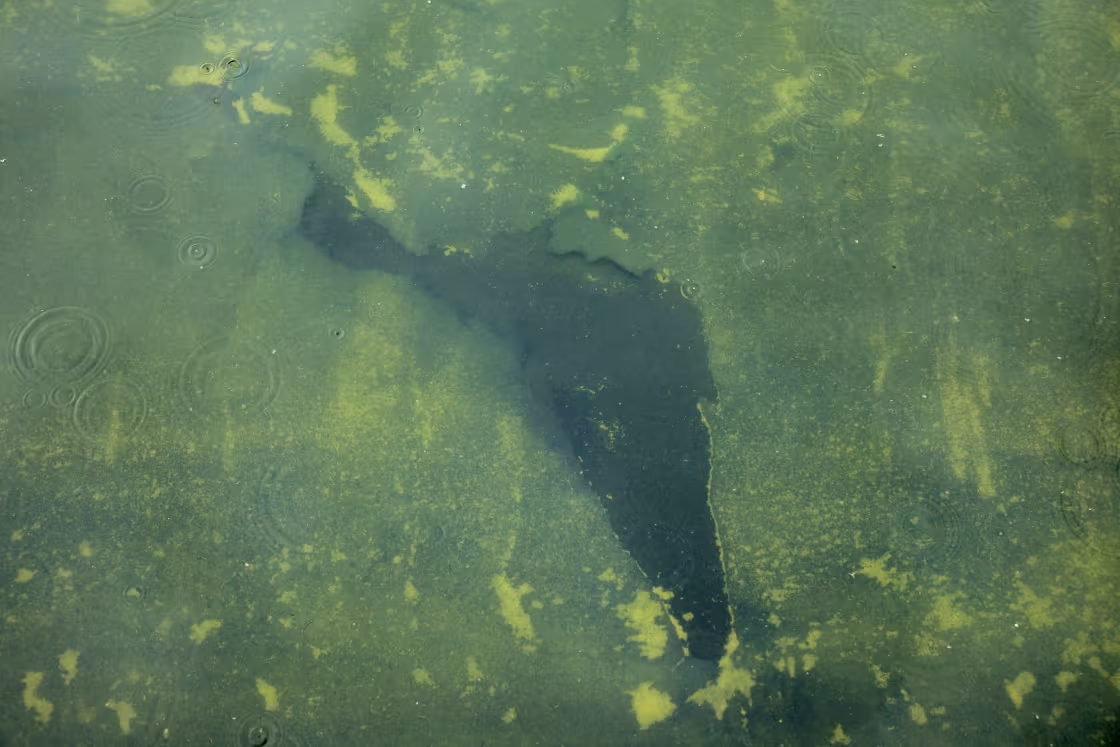
President Donald Trump has claimed that vandalism is behind ongoing problems at the Lincoln Memorial Reflecting Pool in Washington, D.C., as the $14 million renovation project continues to face visible issues and public scrutiny.
The pool, located on the National Mall near the Lincoln Memorial, was recently refurbished as part of a wider beautification effort led by the administration ahead of the country’s 250th anniversary. However, it has since been affected by algae growth and peeling surface coating, raising concerns about the quality and durability of the work.
Trump said on social media that multiple people had been arrested in connection with what he described as vandalism at the site. He also suggested that the alleged acts could result in serious legal consequences, including long prison sentences, though he did not provide evidence to support these claims.
In his posts, Trump said vandals had caused significant damage to the structure, including cuts and the use of harmful substances. He described the actions as an attack on a national landmark and said they showed disrespect toward former presidents George Washington and Abraham Lincoln.
The renovation included applying a new blue sealant to the pool floor, intended to improve its appearance. However, shortly after the work was completed, algae began to develop in the water, turning it green. Parts of the new coating also started to peel and float on the surface.
The Reflecting Pool, a 2,030-foot-long landmark, sits between two of the most visited monuments in the United States. The visible deterioration has attracted attention from visitors, media, and environmental observers.
Workers have been deployed to clean the pool and treat the water in an effort to control the algae bloom. Despite these efforts, reports indicate that the water remains partially discolored and the coating continues to break apart in some areas.
Trump said he met with contractors involved in the project and suggested that the pool may need to be drained again to complete repairs. He argued that more extensive work may be required to fix what he described as damage caused by vandalism and interference.
Among those arrested in connection with the site was David “Davey” Hearn, a three-time Olympic canoeist. Hearn said he was detained after touching a piece of the peeling material during a visit to the pool while cycling nearby.
Hearn stated that he did not damage or remove any material and said he was unclear about the reason for his arrest at the time. He added that he was held for several hours before being released. Authorities have not publicly detailed the charges related to his detention.
The situation has added to growing debate over the renovation project, which has faced criticism over its execution and cost. The $14 million upgrade was part of a broader effort to restore and enhance public monuments in Washington, D.C.
Reports have also raised questions about the contracting process for the work, including concerns about procurement decisions. However, officials have not confirmed any wrongdoing related to the project’s management.
Environmental conditions have also contributed to the controversy. An algae bloom developed in the pool after it was refilled, requiring repeated cleaning efforts. Experts say such blooms can occur in warm, nutrient-rich water environments.
The U.S. Park Police and National Park Service have not released full details about any arrests or ongoing investigations connected to alleged vandalism at the site.
As restoration work continues, the Reflecting Pool remains under close observation, with crews attempting to stabilize water quality and repair the damaged surface. The situation continues to draw national attention due to its symbolic importance and the political debate surrounding it.
