


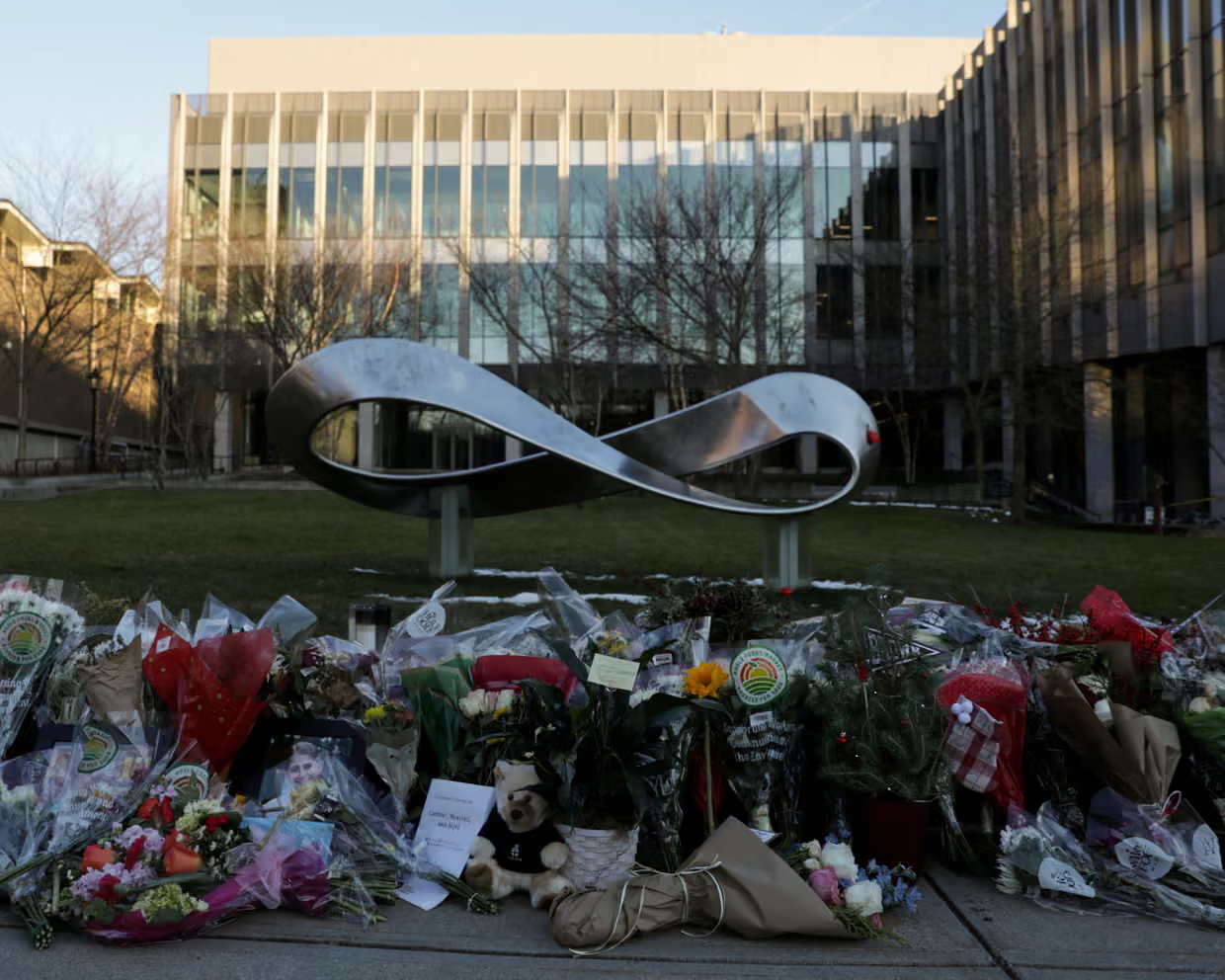
The Brown University Shooting case has taken a new turn after federal authorities released updated findings. The FBI’s Boston division said the suspect acted due to a long buildup of personal grievances. Officials described the attack as carefully planned and driven by a belief that others were responsible for his failures. The report was shared more than four months after the deadly incident in December.
The suspect, Claudio Manuel Neves Valente, was a 48-year-old Portuguese national. He carried out a shooting at Brown University that killed two students and injured nine others. Authorities also confirmed he killed Massachusetts Institute of Technology professor Nuno Loureiro in a separate incident at a home outside Boston on December 15. He was later found dead from a self-inflicted gunshot wound on December 18 after a police search.
The FBI said Neves Valente appeared to act alone during the Brown University Shooting. Investigators found no evidence of outside help. Officials said his victims were chosen in a symbolic way. They believe he targeted institutions and individuals he associated with personal failure and past grievances. The FBI said he showed no remorse in recorded messages after the attacks.
According to investigators, planning for the Brown University Shooting began as early as 2022. Neves Valente had previously studied physics in Portugal at Instituto Superior Tecnico, where he studied at the same time as Loureiro. He later attended Brown University in 2001 but withdrew before completing his studies. He eventually left the United States and later returned years later as a permanent resident.
Authorities said he obtained lawful permanent residency in 2017 while living in Florida. At the time of the attacks, he was unemployed. The FBI report stated that he struggled with social isolation and had no close family or friends who could intervene. Officials believe this lack of support may have prevented warning signs from being reported earlier.
The FBI also said the suspect developed an inflated sense of self over time. Investigators believe this led to repeated conflicts with others. As his personal and professional setbacks increased, his frustration grew stronger. Officials said this created a mindset where he believed he was being treated unfairly by those around him.
The report describes a long process of emotional decline that contributed to the Brown University Shooting. Investigators said his perception of injustice became more intense over time. This growing resentment reportedly shaped his decision to plan attacks against people and institutions he connected to past failures.
Authorities emphasized that the suspect acted independently and did not coordinate with any group. They also confirmed that digital recordings left behind provided insight into his thinking before the attacks. In these messages, he reportedly described his actions but did not express regret.
The FBI said the investigation has now concluded a significant part of its work. However, officials continue to review evidence to fully understand the suspect’s behavior and timeline. They also stressed that the case highlights the importance of early mental health awareness and community support systems.
The Brown University Shooting has raised ongoing concerns about campus safety and prevention of targeted violence. Law enforcement agencies continue to study the case to identify warning patterns. Officials say understanding behavioral escalation may help prevent similar tragedies in the future.
Authorities maintain that there was no broader threat connected to the suspect. They believe the attack was the result of personal grievances that developed over many years. The case remains one of the most serious campus-related violence incidents in recent US history, prompting renewed focus on early intervention and reporting systems.
