


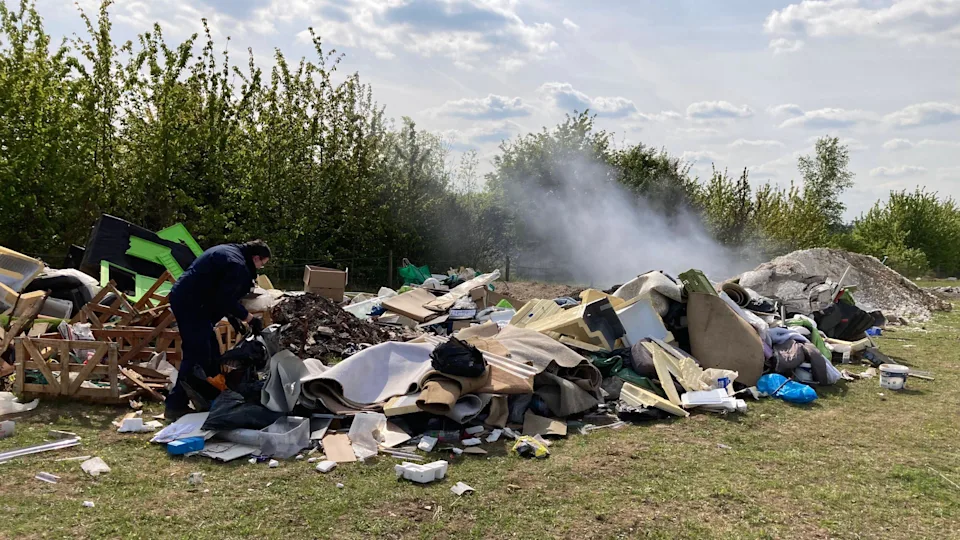
A council leader in Kent is calling for tougher fly tipping penalties after a man received a suspended prison sentence for his role in operating an illegal waste site.
Jamie Broadmore, 41, from Strood, admitted an offence under the Environmental Protection Act following an investigation into large-scale waste dumping on land owned by National Highways in Northfleet.
The case began after fire crews were called to the site in 2022. Investigators discovered several hundred tonnes of controlled waste, including hazardous materials. Officials said some of the waste had been burned, raising concerns about pollution and public health risks.
According to Gravesham Borough Council, Broadmore continued taking waste to the site despite being served official notices. The location, situated between Wrotham Road and Hog Lane, became the focus of a lengthy investigation by local authorities.
Broadmore pleaded guilty to treating, keeping, or disposing of controlled waste in a way that was likely to cause environmental pollution or harm to human health. He entered his guilty plea at Maidstone Crown Court on 1 May.
On 24 June, the court handed Broadmore a six-month prison sentence suspended for 12 months. He was also ordered to complete 100 hours of unpaid work, pay £1,000 in compensation, pay a victim surcharge of £156, and take part in 10 days of rehabilitation activity.
The case has renewed debate about whether current punishments are strong enough to deter environmental crime.
Gravesham Borough Council leader John Burden said the sentence did not reflect the seriousness of the offence. He argued that someone involved in large-scale illegal dumping should face stronger consequences, especially when previous convictions are involved.
Council officials said National Highways spent about £150,000 clearing the site. The investigation itself cost an additional £4,840. No costs were awarded to recover those expenses, according to the council.
Authorities noted that Broadmore had 16 previous convictions before this case.
Local leaders say fly tipping continues to place a heavy burden on communities. Illegal waste dumping can damage land, create health hazards, increase fire risks, and lead to significant cleanup costs for public bodies and taxpayers.
Lauren Sullivan, the Member of Parliament for Gravesham, said fly tipping should not be viewed as a minor offence. She said environmental crime harms communities, threatens public safety, and leaves local residents paying the cost through public funds.
The case has led to fresh calls for changes to sentencing guidelines and stronger penalties for repeat offenders involved in illegal waste activities.
The Department for Environment, Food and Rural Affairs said the government is committed to tackling waste crime and making offenders responsible for the damage they cause.
Officials pointed to the Waste Crime Action Plan, which aims to strengthen enforcement efforts across the country. The plan includes increased monitoring, greater use of technology such as drones, and stronger action against vehicles used in illegal dumping operations.
The department said authorities are being given additional support to investigate waste crime, seize vehicles connected to offences, and take enforcement action against offenders.
Environmental groups and local councils have long argued that stronger penalties could help reduce fly tipping incidents and discourage repeat offences.
The Northfleet case has become a new example in the ongoing debate over how environmental crimes should be punished. While the cleanup work has been completed, local leaders say the financial and environmental impact remains significant.
As pressure grows for tougher fly tipping penalties, attention is now turning to whether future changes in law or sentencing guidelines could lead to stricter punishment for offenders involved in large-scale waste dumping.
