


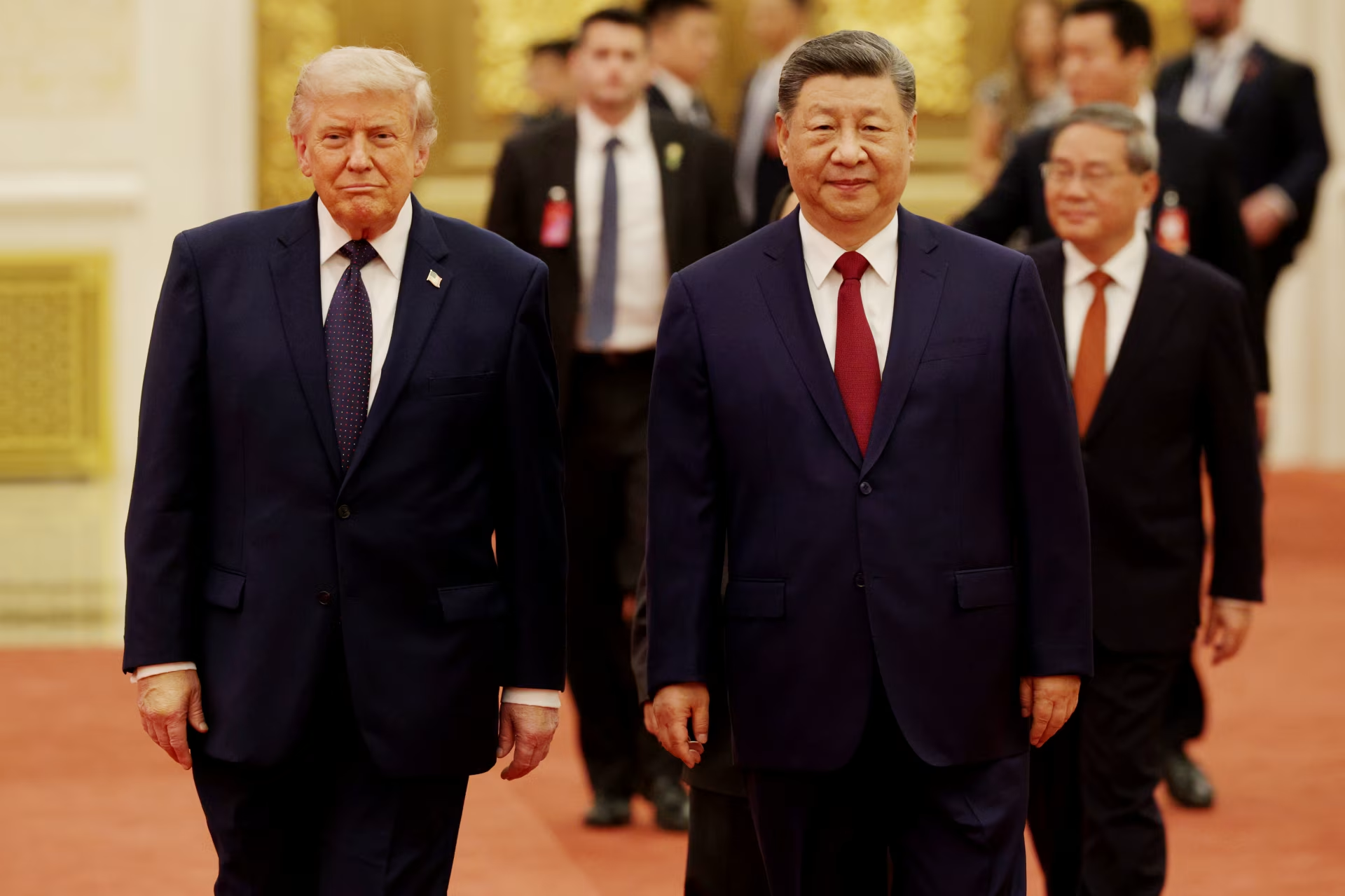
US President Donald Trump warned Taiwan against formally declaring independence from China following a two-day summit with Chinese President Xi Jinping in Beijing.
Speaking to Fox News on Friday after the summit ended, Trump said he was not looking to support a move toward Taiwanese independence. He stressed that the United States wants stability in the region and does not want tensions to grow into military conflict.
Trump said, “I’m not looking to have somebody go independent,” while repeating that current US policy on Taiwan has not changed.
The comments came during a period of rising tension between China and Taiwan, as Beijing continues military activities around the self-governed island.
China considers Taiwan part of its territory and has not ruled out using force to take control of the island in the future.
Taiwan, however, operates with its own government, military, and democratic political system.
Taiwanese President Lai Ching-te has previously said Taiwan does not need to officially declare independence because it already views itself as a sovereign nation.
The United States does not officially recognize Taiwan as an independent country, but Washington maintains strong unofficial ties with the island and remains legally committed to helping Taiwan defend itself.
During the interview, Trump said he and Xi discussed Taiwan extensively during the summit.
He added that Xi feels strongly about the issue and does not want to see any movement toward Taiwanese independence.
Trump also said he wants both sides to “cool down” and avoid military confrontation.
Speaking to reporters while returning to Washington, Trump said he chose not to discuss whether the United States would defend Taiwan in the event of a conflict.
Xi reportedly warned during the summit that Taiwan remains the most sensitive issue in China-US relations.
According to Chinese state media, Xi said mishandling the Taiwan issue could lead to serious conflict between the two countries.
Despite tensions, Trump said he does not currently expect a war with China over Taiwan.
China has increased military drills and naval activities around Taiwan in recent years, raising concerns among regional governments and international security experts.
The US has continued supplying defensive weapons to Taiwan, which has repeatedly angered Beijing.
Late last year, the Trump administration announced an USD 11 billion arms package for Taiwan that included missile systems and advanced rocket launchers.
China strongly criticized the proposed weapons sale.
Trump said he and Xi discussed the issue in detail during the summit and that he would soon decide whether the sale will move forward.
He also suggested he may speak directly with Taiwan’s leader before making a final decision.
Direct communication between a US president and Taiwan’s leader is highly sensitive because Beijing considers such contact a challenge to its “One China” policy.
Taiwan Deputy Foreign Minister Chen Ming-chi responded cautiously to Trump’s remarks.
Chen said Taiwan would need to better understand the meaning behind the president’s comments.
He also defended continued US arms sales to Taiwan, calling them important for regional peace and stability.
A spokesperson for President Lai said American military support helps deter regional threats and supports security in the area.
Taiwan Foreign Minister Lin Chia-lung said Taiwan had closely monitored the summit between Trump and Xi.
He added that Taiwan continues maintaining strong communication with the United States and other international partners to protect its interests.
Lin also accused China of increasing regional risks through military pressure and aggressive actions around Taiwan.
The Taiwan issue remains one of the biggest challenges in relations between Washington and Beijing.
While the United States officially supports the “One China” policy, it also continues providing military and political support to Taiwan.
Analysts say Trump’s latest comments show Washington is still trying to balance its relationship with China while avoiding actions that could increase tensions in the region.
The summit between Trump and Xi highlighted how Taiwan continues to remain at the center of global security concerns in Asia.
