


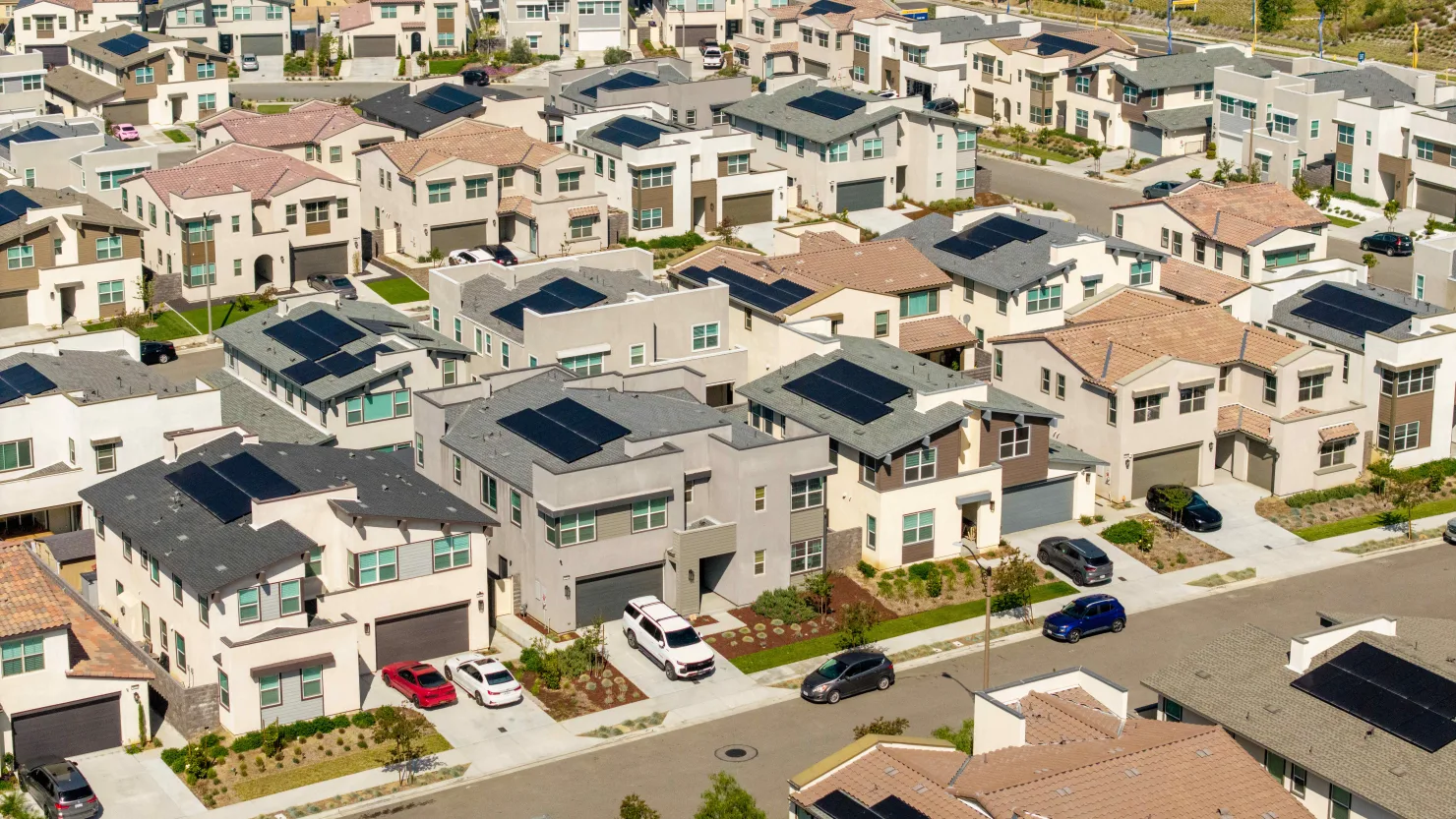
Homebuyers across the United States are continuing to enter the housing market despite mortgage rates climbing to their highest level in more than a month.
New data from the Mortgage Bankers Association showed that total mortgage application activity increased last week as buyers remained active even with borrowing costs staying elevated.
Mortgage application volume rose 1.7 per cent compared with the previous week, according to the group’s seasonally adjusted index.
The average interest rate for a 30-year fixed mortgage with conforming loan balances increased slightly to 6.46 per cent from 6.45 per cent.
Although the rise was small, mortgage rates are now sitting at their highest point in five weeks.
Applications from buyers looking to purchase homes increased 4 per cent during the week. Demand was also 7 per cent higher compared with the same period one year earlier.
The stronger activity suggests many buyers are becoming more comfortable with the current rate environment after several years of fluctuating borrowing costs.
Housing demand slowed earlier this spring when tensions involving Iran increased uncertainty in financial markets and pushed energy prices higher.
However, buyers now appear less worried about global instability and mortgage rate volatility.
Joel Kan said potential buyers are adapting to current economic conditions.
“Potential homebuyers shrugged off the current economic and mortgage rate uncertainties and returned to the market,” Kan said.
The comments reflect growing optimism among some housing analysts who believe buyers are slowly adjusting to what many now consider the “new normal” for mortgage rates.
Before the pandemic, mortgage rates below 4 per cent were common. But inflation, interest rate increases, and economic uncertainty pushed borrowing costs sharply higher during recent years.
Despite higher monthly payments, housing demand has remained relatively stable in many parts of the country.
During a recent conference call about April home sales, Lawrence Yun said real estate agents have recently reported stronger buyer activity.
According to Yun, interest from homebuyers has increased during the past several weeks.
At the same time, refinancing activity remains weaker than home purchase demand.
Applications to refinance existing home loans fell 1 per cent during the week, although refinancing activity still remained 28 per cent higher than the same week last year.
Kan said refinance applications made up slightly more than 40 per cent of total mortgage applications last week. That marked the lowest share since July 2025.
Higher mortgage rates usually reduce refinancing demand because homeowners become less likely to replace older low-interest loans with newer higher-rate mortgages.
Mortgage rates also moved sharply upward at the start of this week following fresh economic concerns.
Financial markets reacted to weaker optimism surrounding possible progress in the Iran conflict as well as a stronger-than-expected inflation report.
Higher inflation often increases pressure on interest rates because investors expect the Federal Reserve to keep monetary policy tighter for longer periods.
According to data from Mortgage News Daily, the average 30-year mortgage rate has already risen another 14 basis points this week.
The housing market continues facing several challenges, including limited home supply, high prices, and elevated borrowing costs.
Still, many buyers appear willing to continue searching for homes despite those obstacles.
Housing experts say strong employment levels and steady wage growth are helping support demand in many regions.
Some buyers may also feel pressure to enter the market now before mortgage rates move even higher later this year.
The spring and summer months are traditionally the busiest periods for the US housing market.
Because of this, economists will continue watching whether buyer demand remains strong if rates continue rising in the coming weeks.
For now, the latest figures suggest many Americans are adjusting to higher borrowing costs rather than waiting for rates to fall sharply again.
That shift may signal a more stable housing market environment after years of major swings caused by inflation, interest rate hikes, and global economic uncertainty.
