


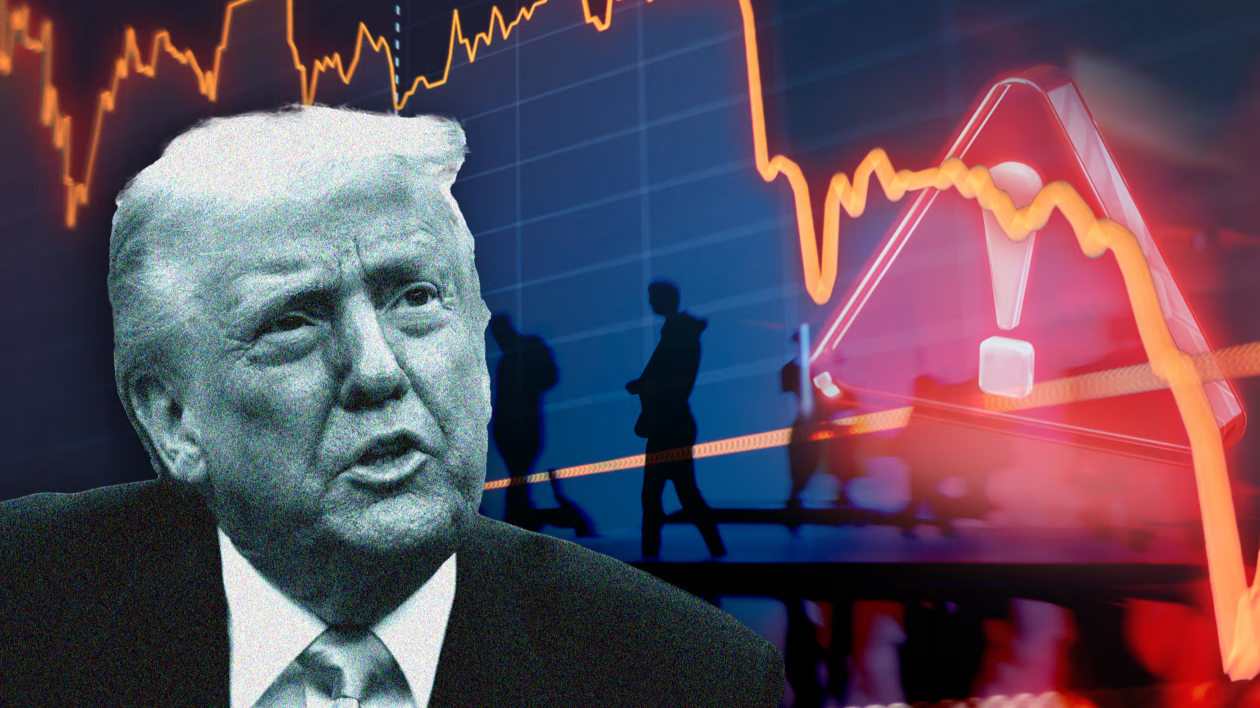
New warnings from top economists are raising concerns about the future of the United States economy as rising global tensions and energy prices continue to pressure markets.
Mark Zandi said the American economy could face serious trouble if the conflict involving Iran continues for another two to three months.
The warning comes as economic experts debate whether the world’s largest economy can continue handling multiple pressures at the same time.
Analysts say the US economy is dealing with growing strain from trade tensions with China, rising oil prices, global instability, and concerns surrounding the rapid growth of artificial intelligence investments.
For years, the American economy has shown strong resilience during periods of crisis. It recovered from the Covid-19 pandemic, high inflation, and major supply chain problems faster than many experts expected.
President Donald Trump has also pointed to strong stock market performance as proof that the economy remains healthy.
He has dismissed many recession warnings and argued that the country’s economic growth remains stable despite global uncertainty.
However, some economists believe the situation is becoming more fragile.
Mark Zandi warned that the stock market may not reflect the true condition of the wider economy.
He argued that recent market gains are heavily linked to excitement surrounding artificial intelligence rather than long-term economic strength.
According to Zandi, large investments in AI companies have boosted stock prices and increased wealth for investors. But he said the rapid growth may resemble a financial bubble driven by optimism instead of stable fundamentals.
Artificial intelligence has become one of the biggest drivers of Wall Street growth during the past year. Technology companies linked to AI have attracted billions of dollars in investment.
Still, economists worry that overdependence on the AI sector could create risks if market confidence weakens.
Zandi noted that official economic figures still appear relatively stable. The US economy recorded about 2 per cent growth during the first quarter, while unemployment remained near 4.3 per cent.
Yet he warned that job growth has slowed sharply since trade tariffs were introduced last year.
According to him, very few new jobs have been created during recent months, leaving businesses more vulnerable if consumer demand weakens further.
He said even a small economic slowdown could lead companies to begin cutting jobs.
The conflict involving Iran has also increased concerns over global energy prices.
Oil prices recently climbed to their highest levels in three years because of fears about regional instability and possible disruptions in major shipping routes.
Higher fuel prices can increase transportation and production costs across the economy. This often affects businesses, consumers, and inflation levels.
Another economist, Claudia Sahm, said the US economy still has some strength but warned that public confidence is becoming weaker.
She explained that inflation alone may not trigger a major economic collapse, but political and financial pressure could increase if fuel prices remain high through the year.
Sahm also pointed to risks surrounding the AI sector and falling economic confidence among consumers.
At the same time, she said the United States benefits from being one of the world’s largest oil producers. This gives the country some protection against supply disruptions in the Strait of Hormuz.
Still, she warned that America’s economic safety margins are much smaller today than in previous years.
Some government officials remain optimistic about the economy’s outlook.
Kevin Hassett said fuel prices may decline before the November midterm elections. He also predicted that economic growth could rise between 4 and 6 per cent by the end of the year.
Despite those positive forecasts, financial markets continue watching global developments closely.
The combination of geopolitical tensions, trade disputes, and high energy costs has increased uncertainty for businesses and investors around the world.
Economic experts say much will depend on how quickly regional conflicts ease and whether consumer confidence can remain stable.
If energy prices continue rising and global tensions worsen, the pressure on the American economy could increase sharply in the coming months.
For now, the US economy continues growing, but economists warn that the margin for error is becoming increasingly narrow.
The coming months may therefore become critical in determining whether the country avoids a major slowdown or enters a deeper economic crisis.
